Projection Screens for Events, Exhibitions and Rental AV
Plan temporary projection for exhibitions, roadshows, conferences and rental AV operations. Compare folding, floor pull-up, desktop and outdoor-oriented screen formats against your image size, audience layout, crew, setup window and transport requirements.
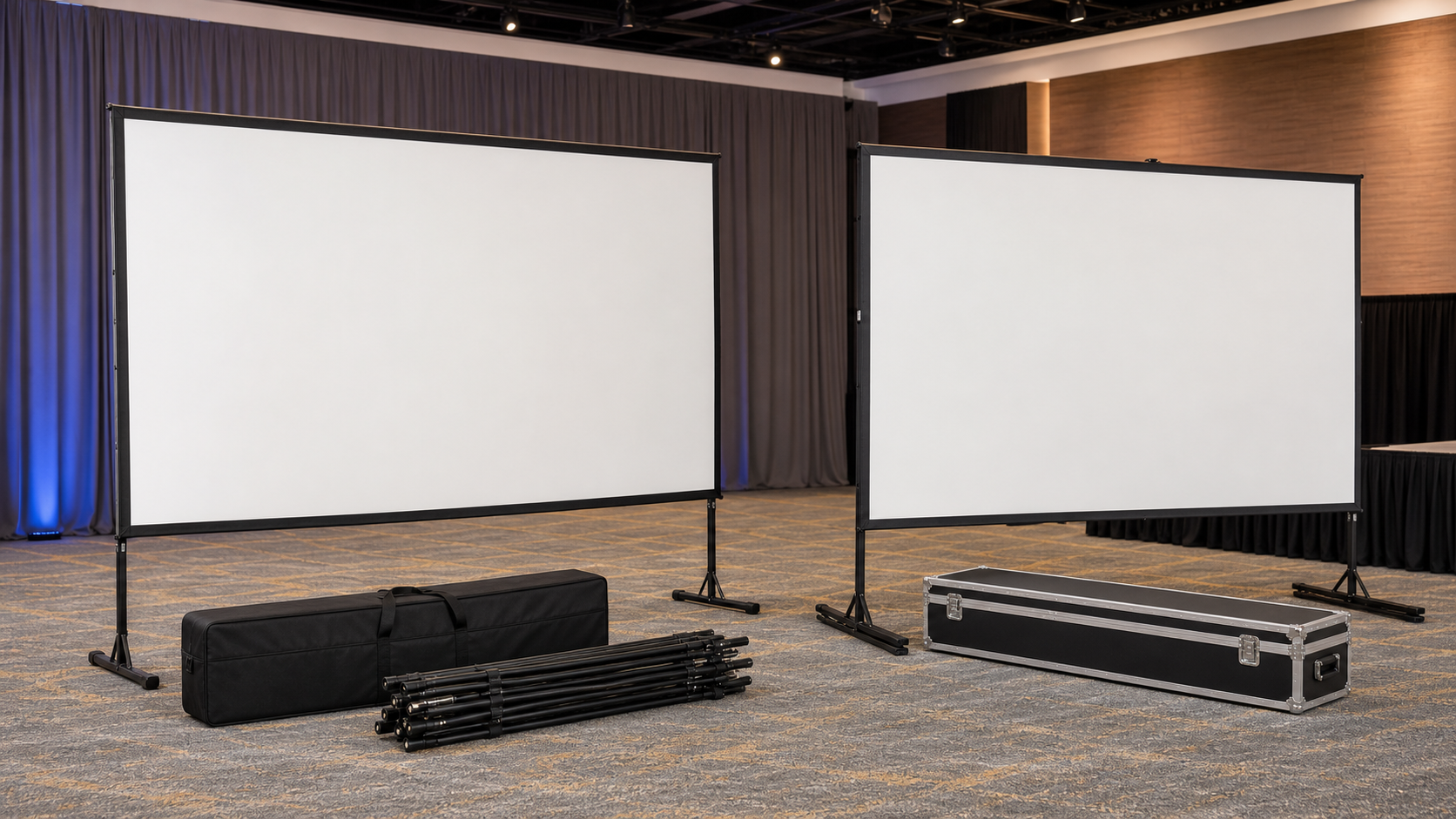
Choose a Screen Around the Event Workflow
Start with the event format, audience positions, projection layout and available setup time. A compact sales demonstration, a touring roadshow and a larger exhibition display may require different screen formats and transport arrangements. Compare the portable screen options before confirming the model and order configuration.
Products matched to this scenario
The four product directions below support different temporary presentation layouts. Confirm the exact model, supported image dimensions, screen surface, included accessories and packing details for your order.
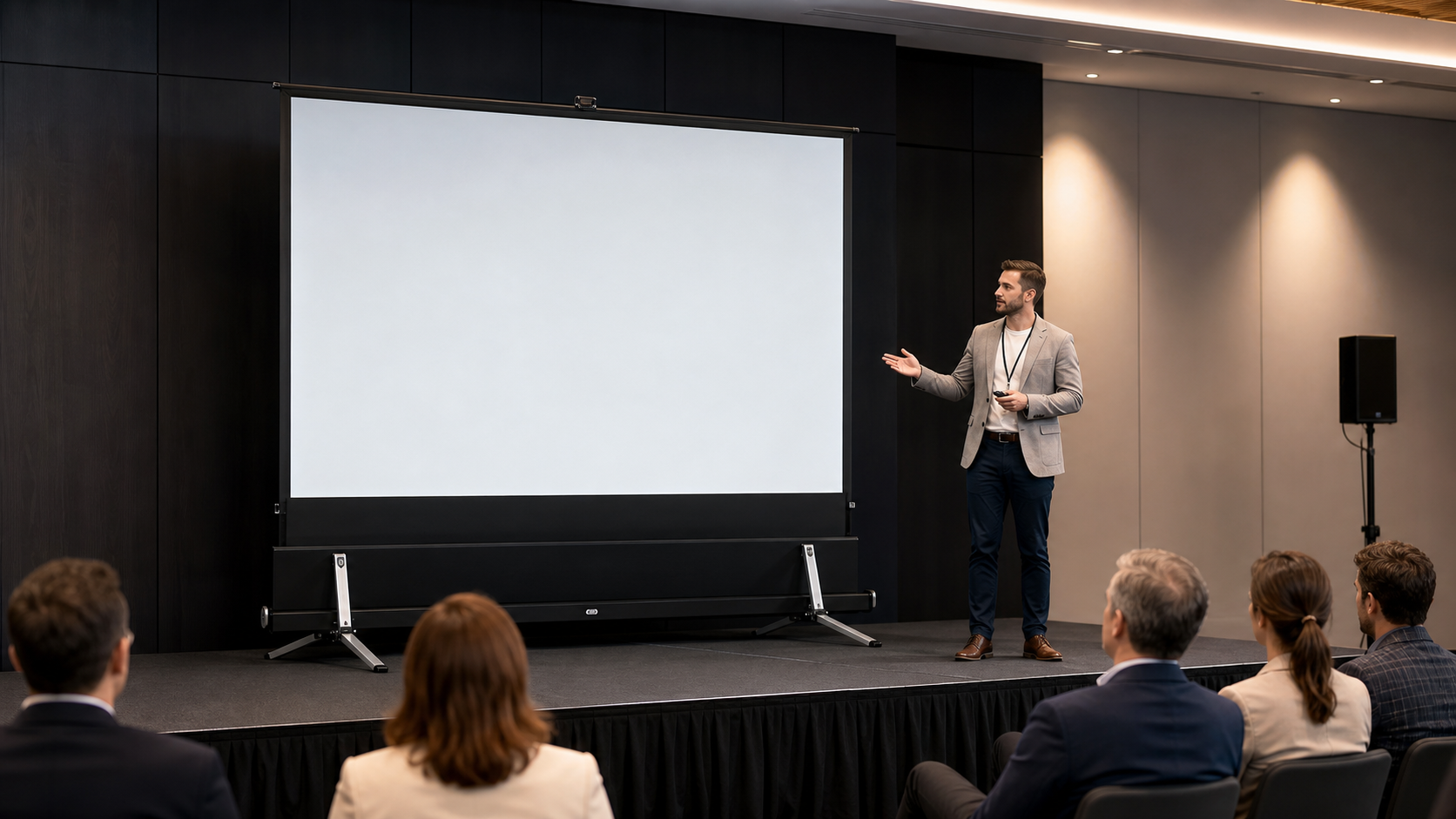
Portable Folding Projection Screen
For larger temporary presentations and repeated event deployment. Confirm the assembly sequence, available crew, frame components, case inclusion and packed transport dimensions.
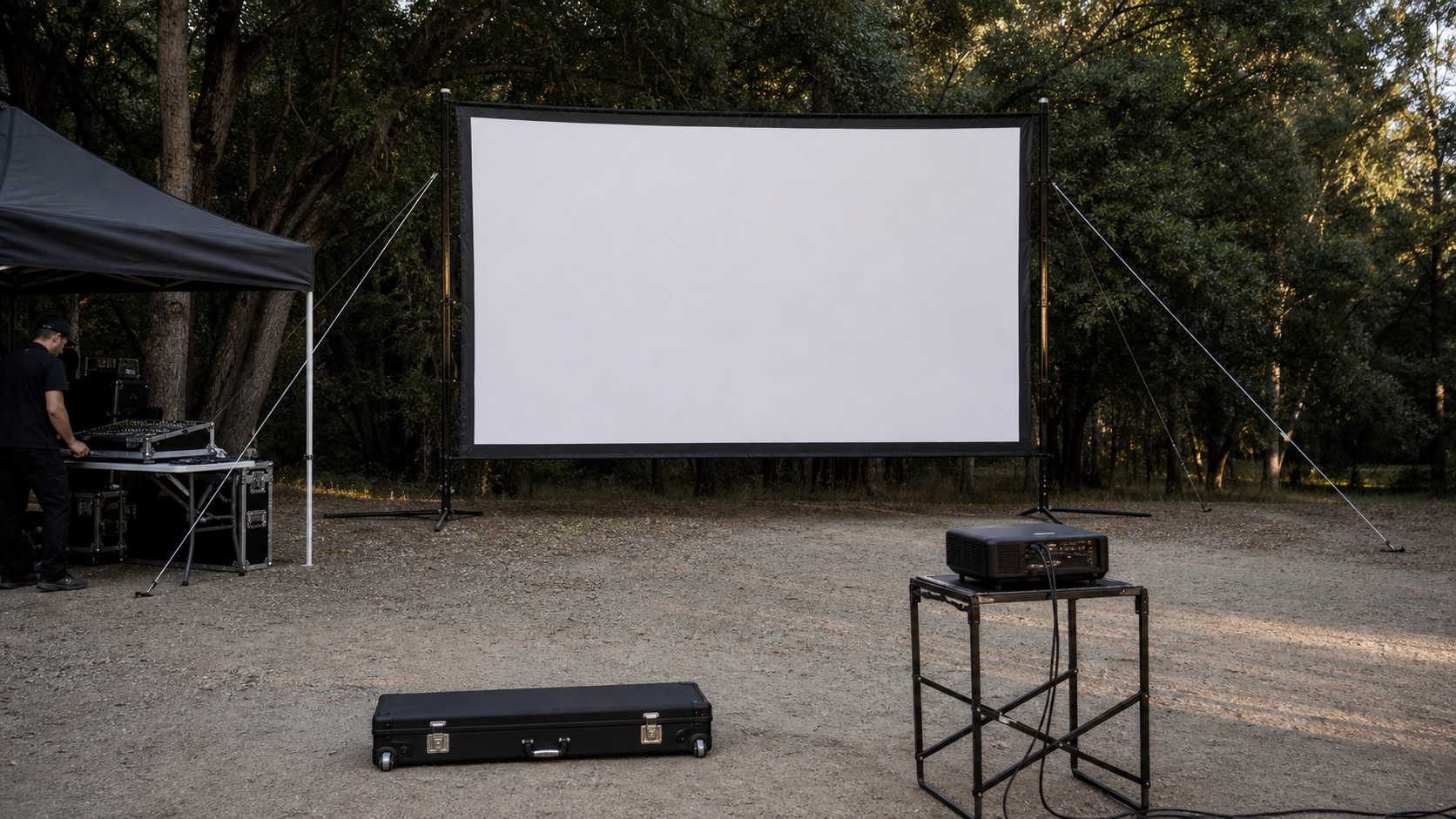
Portable Outdoor Projection Screen
For temporary outdoor-oriented layouts subject to model and site review. Confirm ground conditions, anchoring, weather exposure and operating limits before specifying.
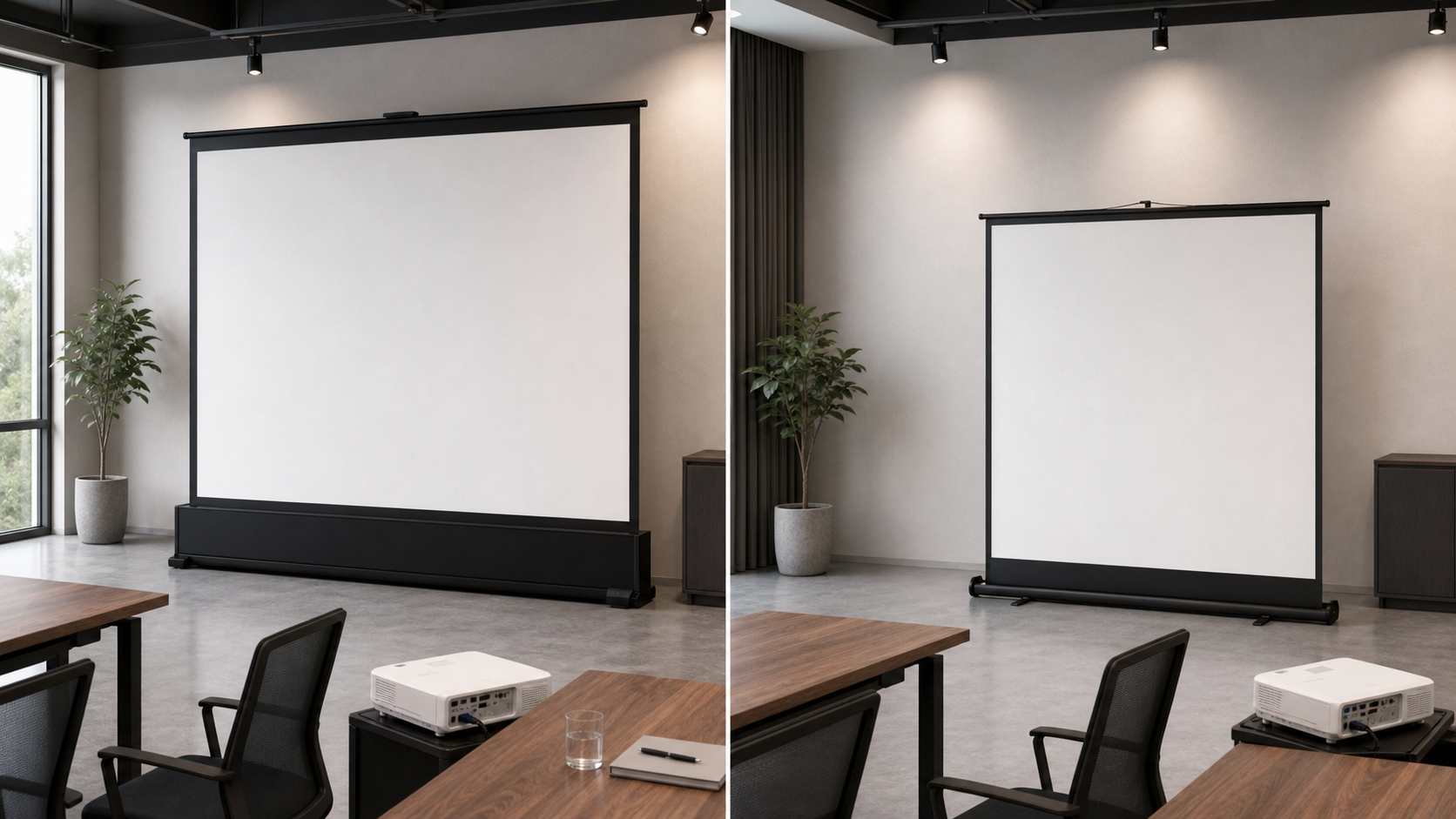
Manual Floor Pull-up Projection Screen
For floor-standing roadshows, training and mobile presentations. Review image size, viewing height, base footprint and the carrying and storage arrangement.
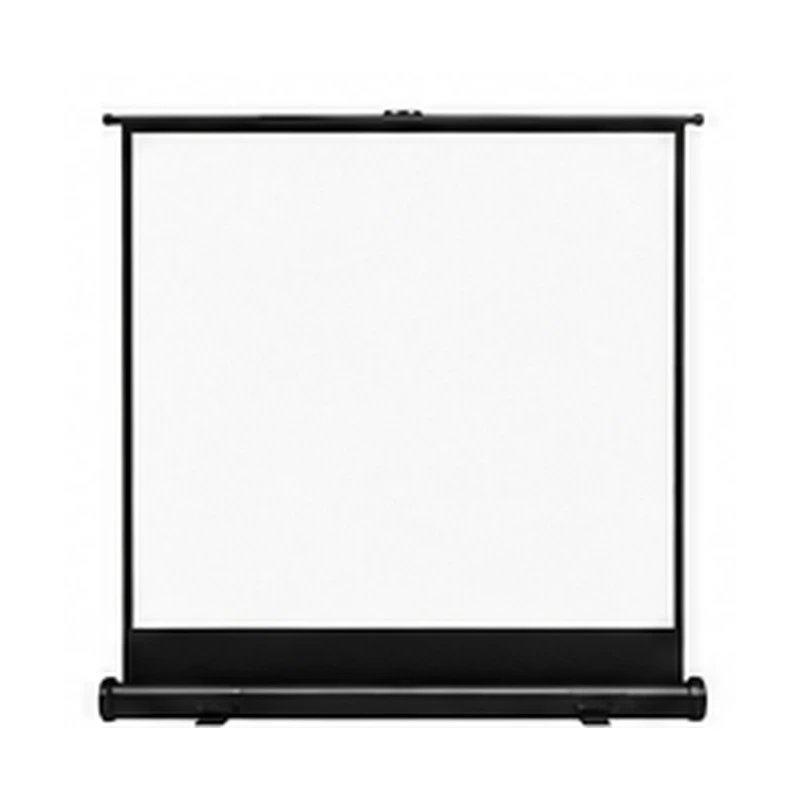
Portable Desktop Pull-up Projection Screen
For tabletop demonstrations, sales presentations and compact mobile teams. Review tabletop space, audience distance, image size and carrying requirements.
Compare Two Temporary Event Layouts
Illustrative planning references for comparing venue requirements. These cards do not document verified MGF installations or measured project outcomes.
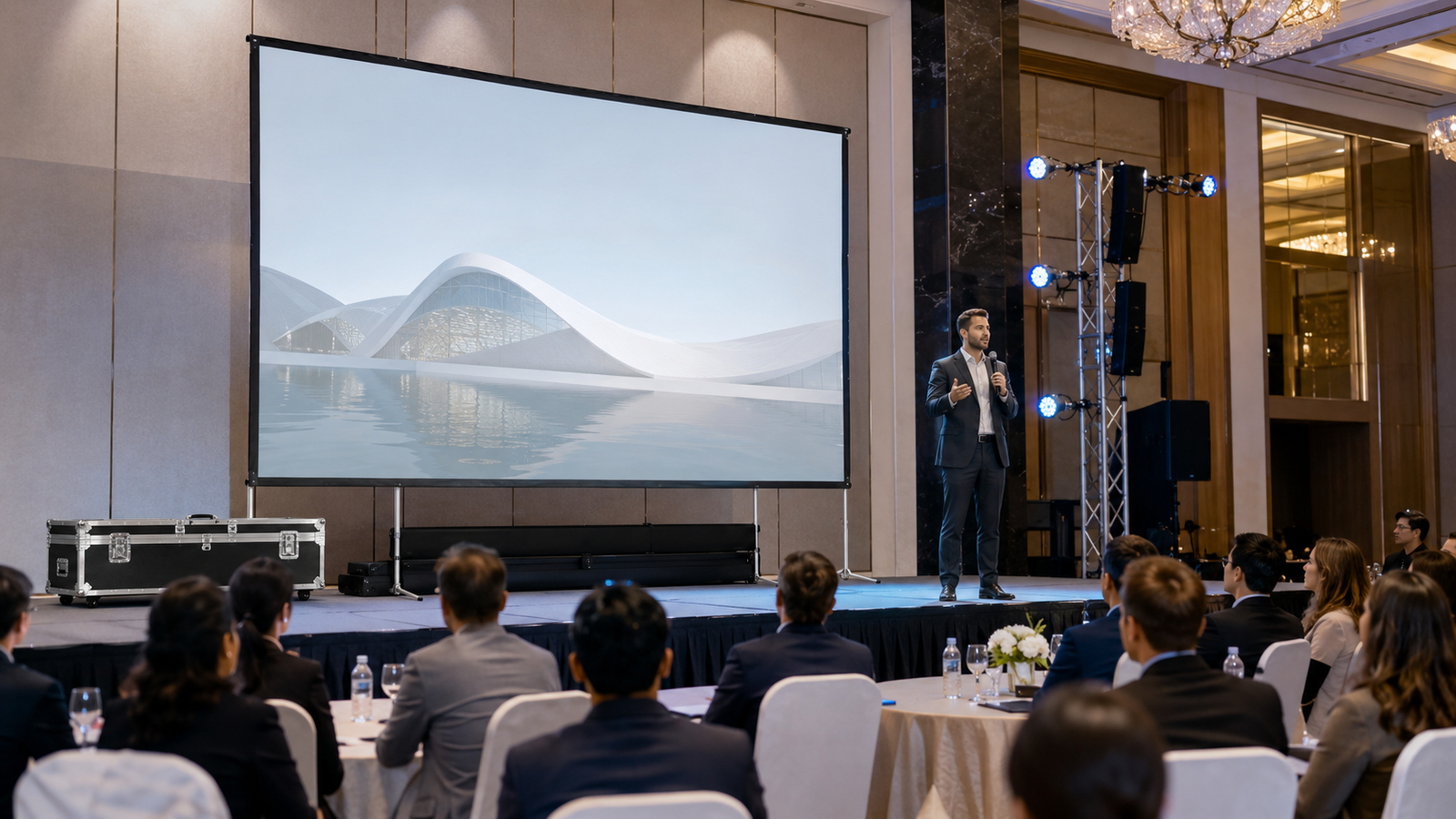
Exhibition Booth Planning
Review booth dimensions, aisle sightlines, projector placement, setup access and transport arrangements for a temporary folding-screen display.
Compare Folding Screens →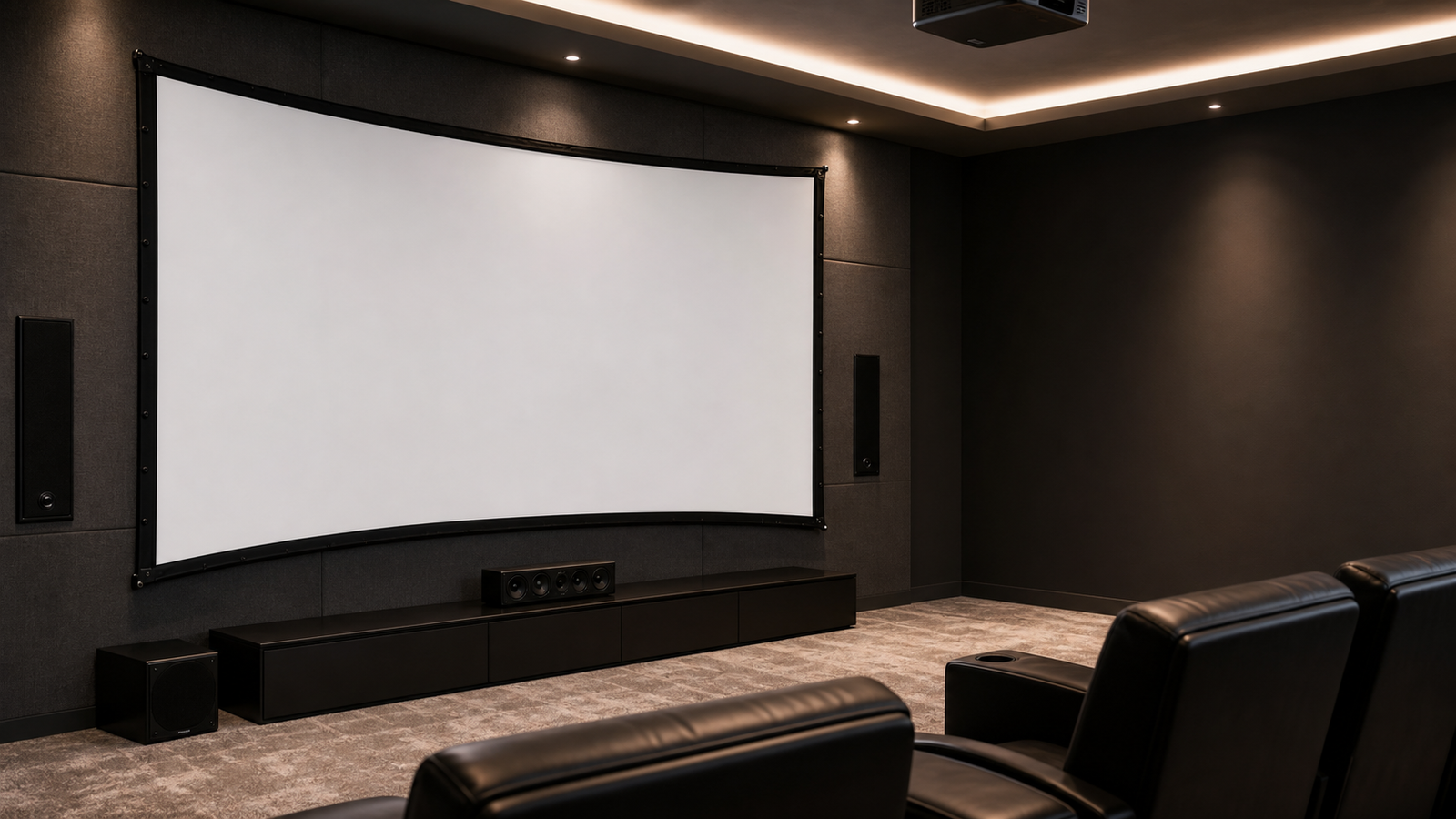
Ballroom Event Planning
Review seating and stage layouts, screen visibility, projector position, setup access and the requirements for temporary or retractable equipment.
Review Large Venue Options →Confirm the Screen Surface for the Event Layout
Review this surface for front projection against the projector, ambient light and audience layout. Confirm the exact material code and compatible screen model.
Review rear projection where backstage throw distance and equipment clearance are available. Confirm the projector geometry, material code and compatible screen model.
Review the exact material construction and its fit with the projector, ambient light and screen model. Request the available specification or sample before confirming it for the event.
Browse MGF screen materials to review the listed surfaces. Availability and suitability must be confirmed for the selected screen model and order configuration.
Plan Image Size Around the Audience and Venue
Confirm visible image width and height, aspect ratio, nearest and farthest viewers, projector throw distance and available clearance. Event type alone is not enough to determine the screen size.
Roadshow / mobile demo
Review audience distance, presentation content, available floor or tabletop space and the transport limits between stops.
Exhibition booth
Review booth width, aisle sightlines, ambient light, front or rear projection and any backstage clearance.
Event hall / banquet
Review seating and stage layouts, image visibility from the rear and side seats, projector position and delivery or assembly access.
Send Your Event Screen Requirements
Share the event type and date, destination country, venue or booth plan, audience layout, required visible image width and height, aspect ratio, projector model and throw distance. Include front or rear projection, available setup and teardown time, crew size, delivery access, transport and storage constraints, deployment frequency and quantity. For outdoor-oriented use, describe the ground conditions and expected weather exposure so model-specific requirements can be reviewed. List any packing, accessory, drawing or OEM requests for confirmation with the quotation.