Daily operation
Manual deployment can be inconvenient for spaces used throughout the day.
MGF manufactures electric projection screen solutions for AV integrators, distributors and commercial projects. Compare wall-mounted, recessed, tab-tensioned and large-venue configurations, with support for screen material, motor control, custom sizing and OEM requirements.
Request a Recommendation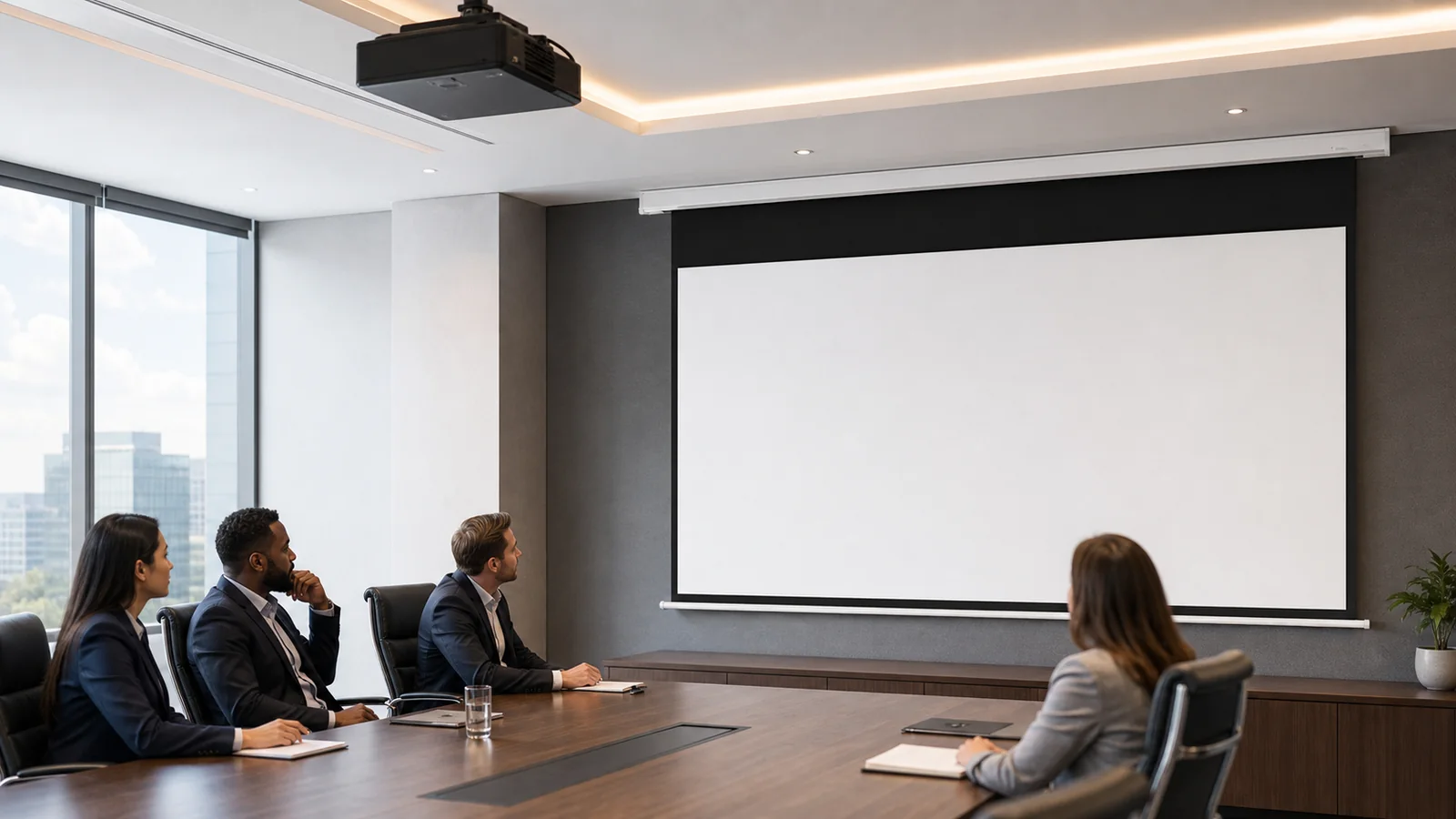
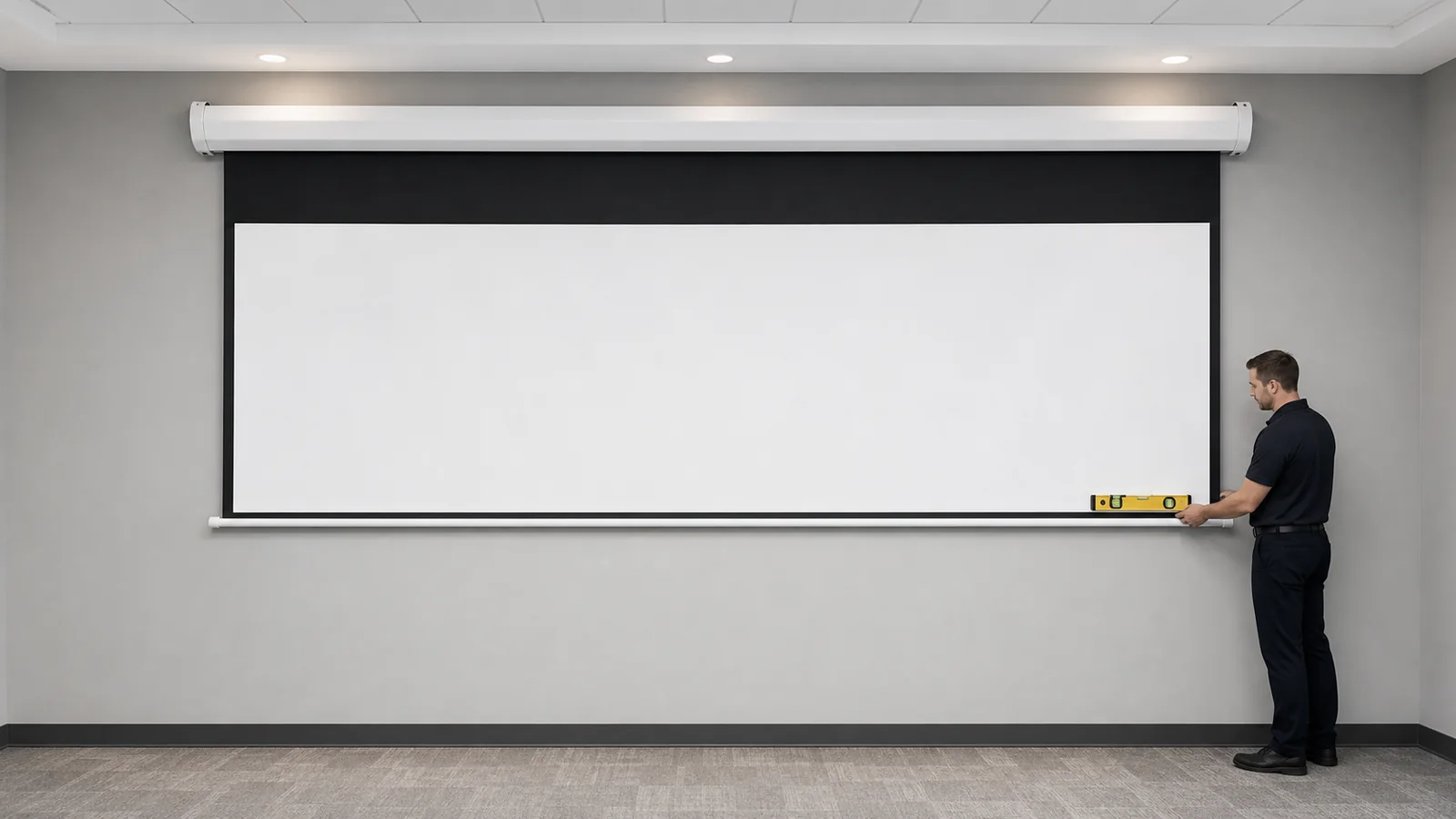
Electric projection screens are motorized systems that lower and raise the screen when the space needs it. They help teams balance clean room design, repeatable operation, and a clear route to control integration.
See the selection logicManual deployment can be inconvenient for spaces used throughout the day.
The right installation method depends on ceiling, wall, access, and viewing conditions.
Screen, projector, and control requirements should be reviewed as one AV system.
AV integrators, distributors, consultants and commercial project teams can use this page to narrow the installation, surface, control and customization direction before model-level review.
Coordinate screen installation, projector placement and control requirements.
Compare product families and prepare OEM or wholesale requirements.
Define room, audience, mounting, access and delivery constraints.
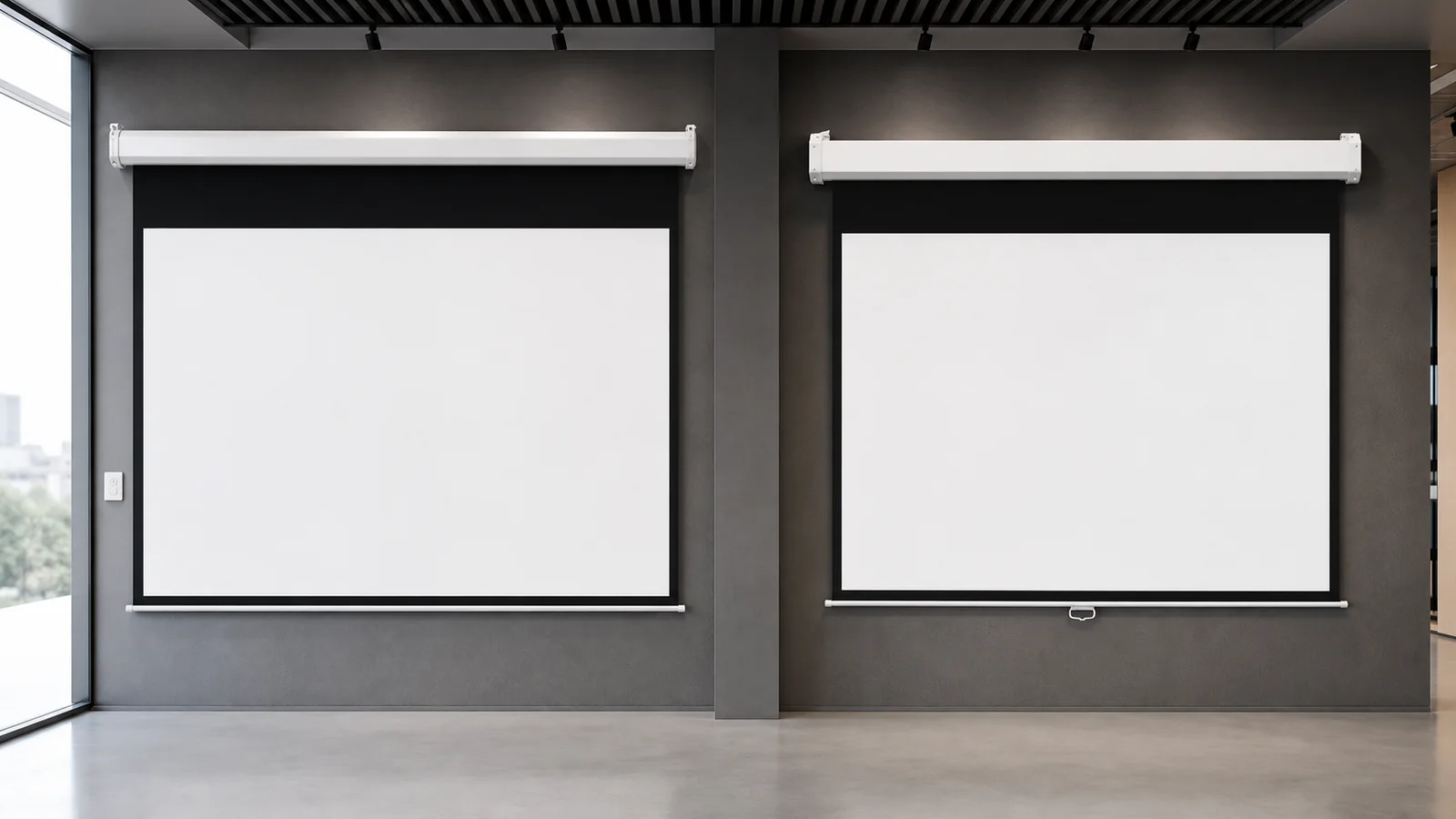
For classrooms, meeting rooms, training spaces, and home installations that need a practical retractable screen.
Installation: wall or ceiling mounted; confirm the selected housing and control method.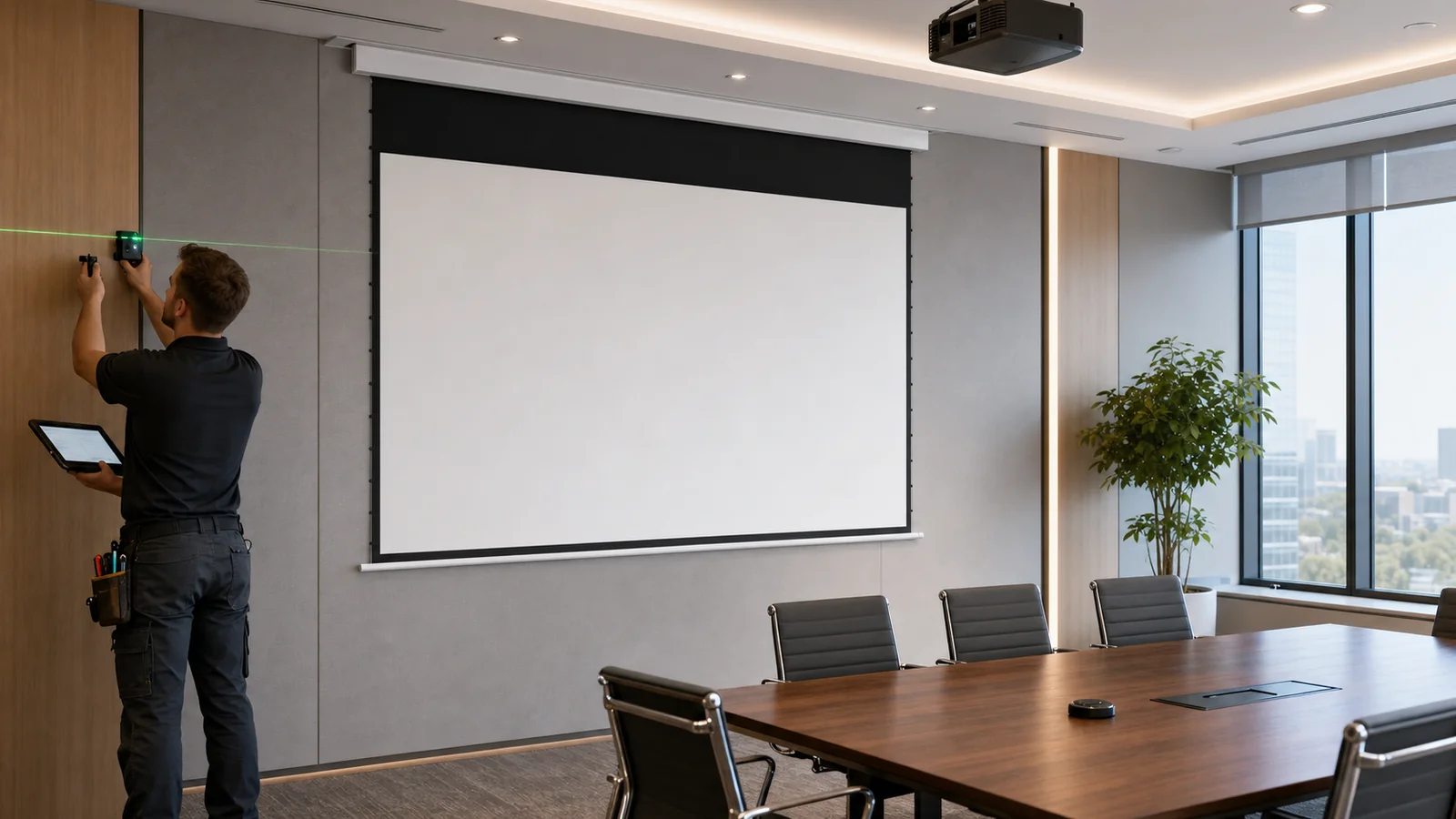
For projects where the screen should sit within a concealed ceiling detail when retracted.
Installation: recessed or concealed; maintenance access must be planned with the ceiling detail.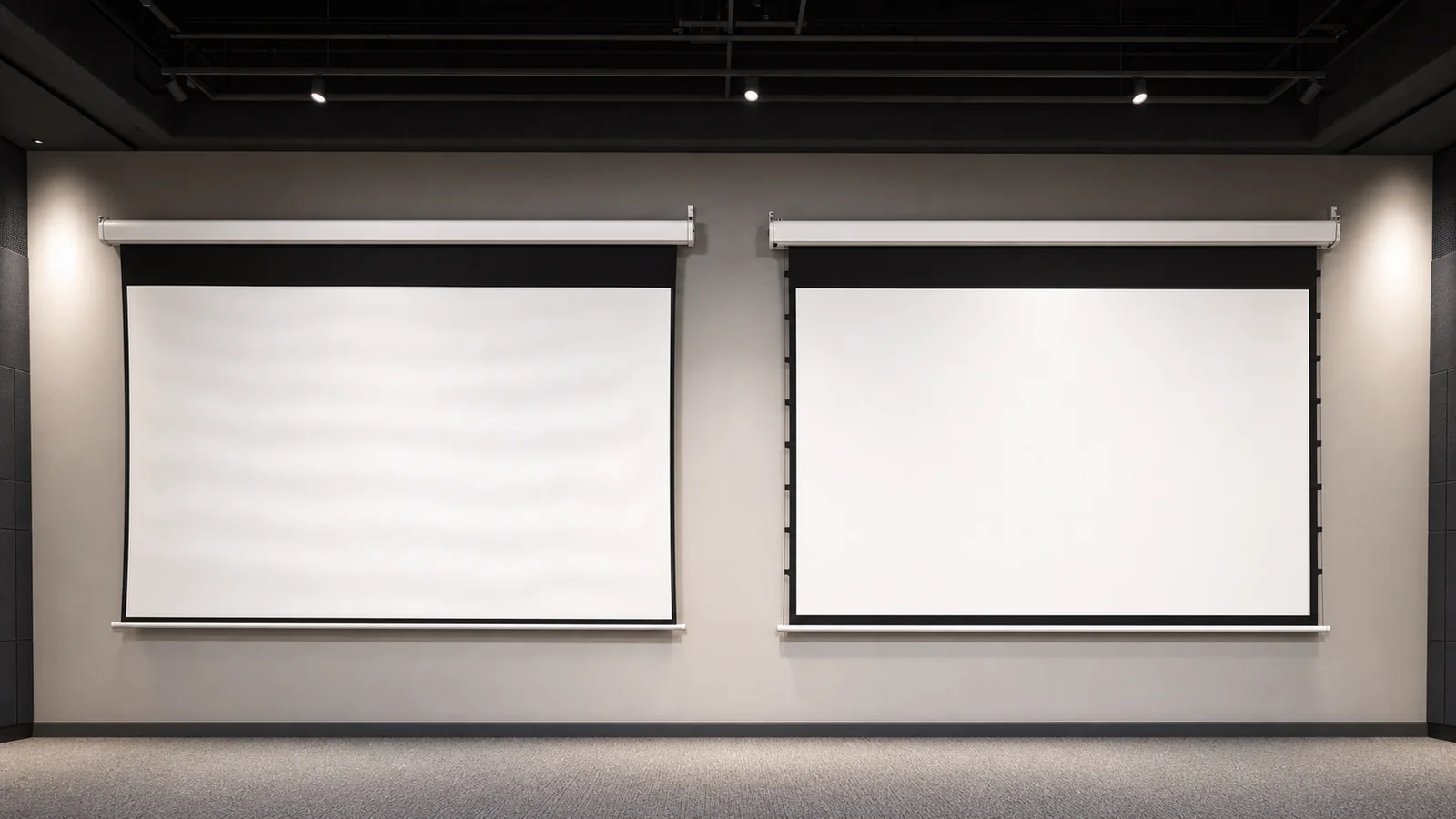
For applications that need a flatter surface direction, including large-format and higher-precision viewing requirements.
Installation: fixed wall or ceiling structure; confirm compatible surface and tensioning configuration.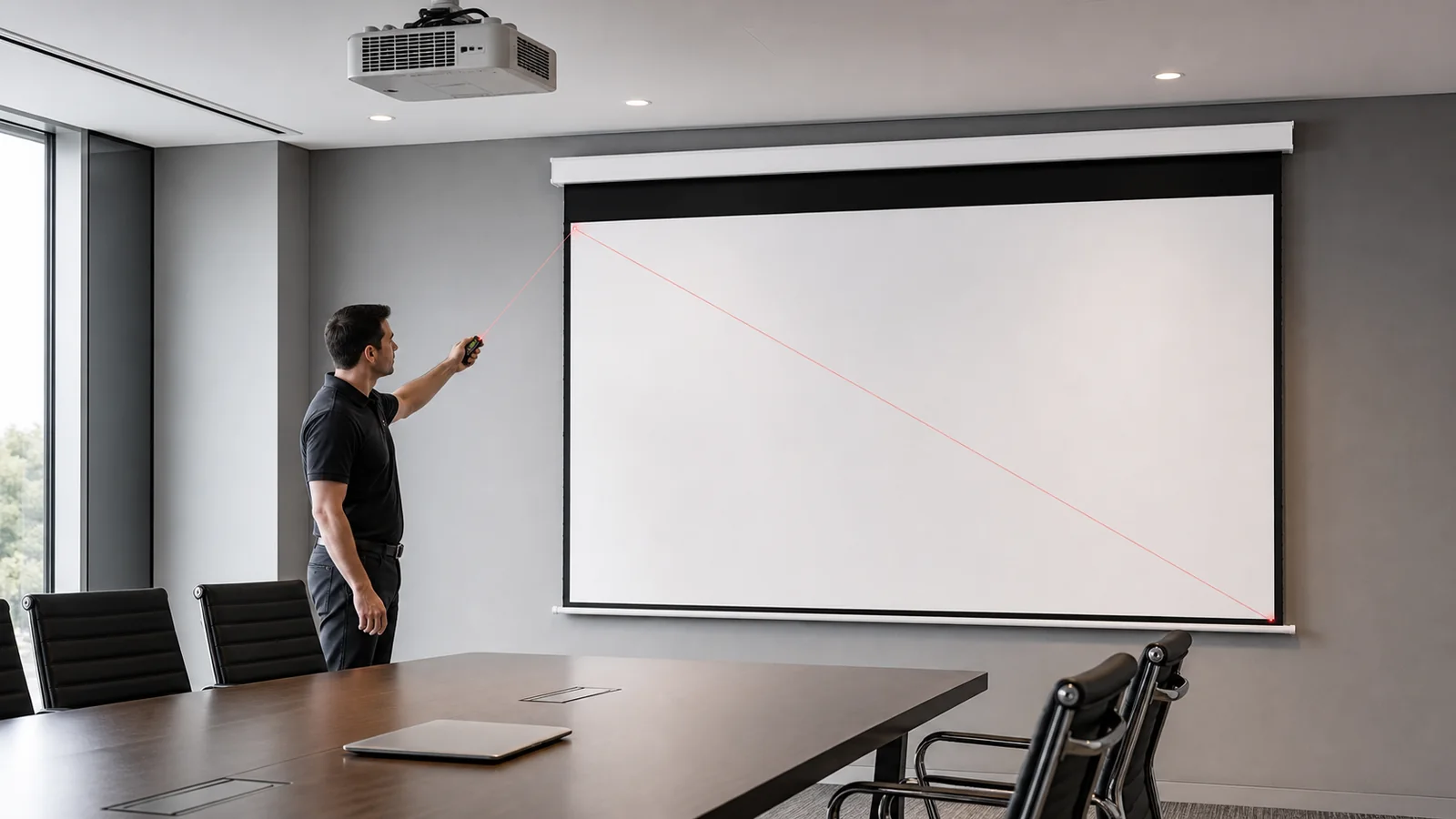
For auditoriums, houses of worship, event spaces, and other large viewing environments.
Installation: project-specific structural planning; confirm size, access, and delivery requirements.| Criteria | What to review | Planning direction |
|---|---|---|
| Space | Ceiling height, wall condition, and available maintenance space | Wall/ceiling mounted or in-ceiling direction |
| Ambient light | Daylight, room lighting, and projector brightness | Confirm surface direction with the project team |
| Viewing distance | Audience layout and comfortable image size | Confirm size and aspect ratio from the room plan |
| Installation | Visible housing, recessed housing, or structural mounting | Match housing and access requirements |
| Control | Standalone use or integration with a room control system | Confirm RF, wall switch, dry contact, or smart control needs |
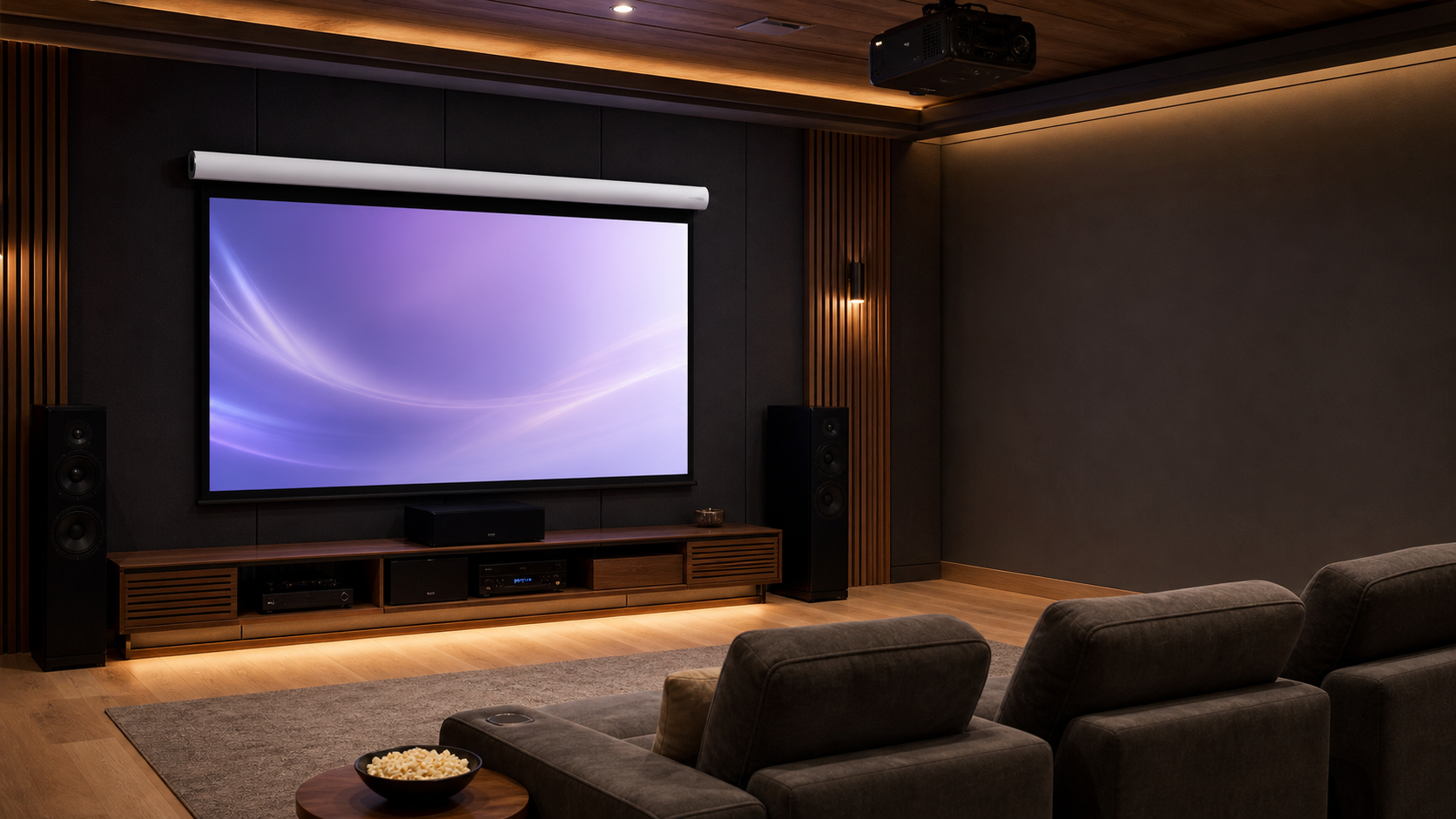
Quiet operation, clean integration, and a surface matched to viewing conditions.
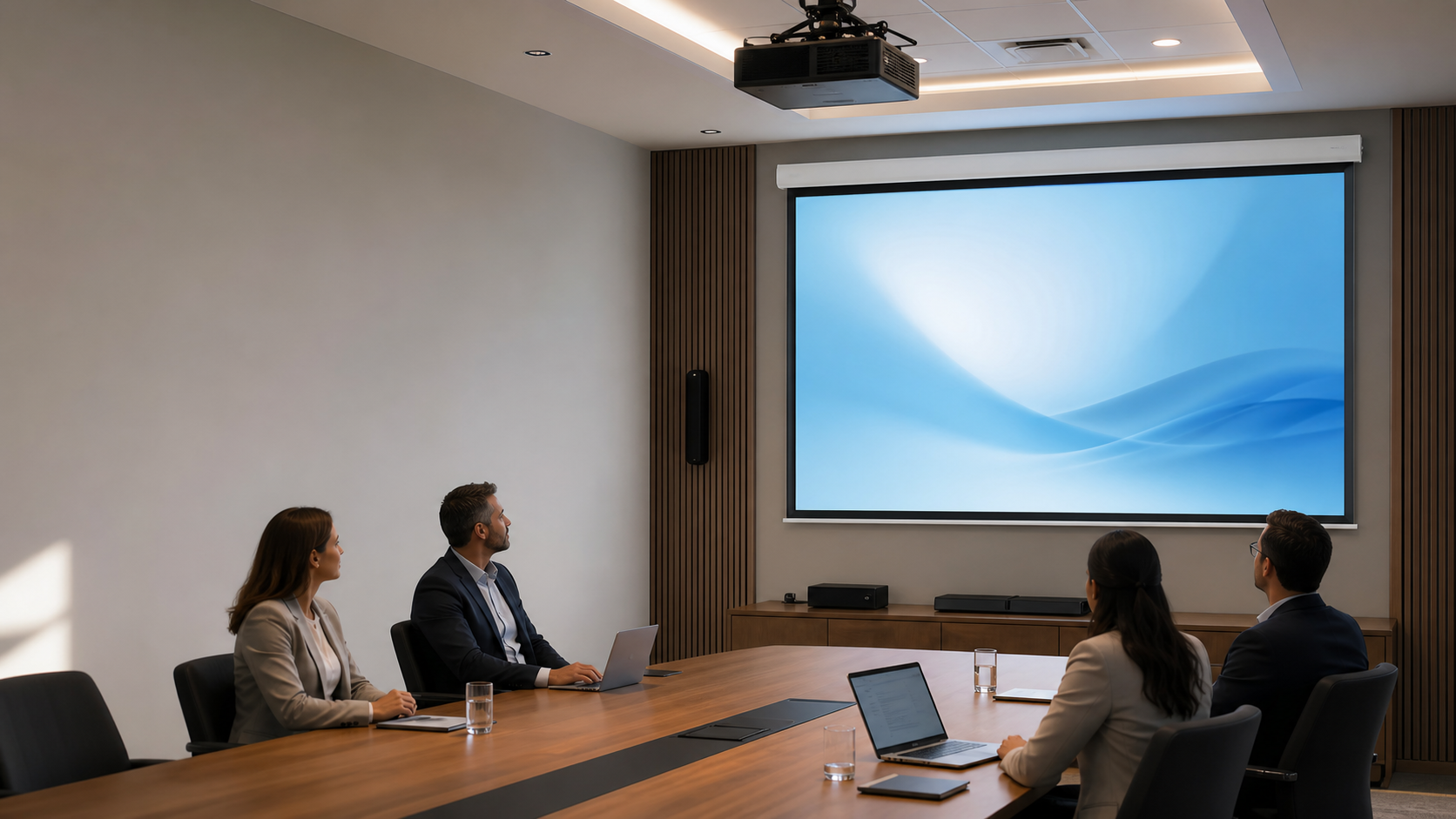
Reliable daily use with a clear path for installation and control.

Practical setup, repeatable use, and straightforward maintenance.
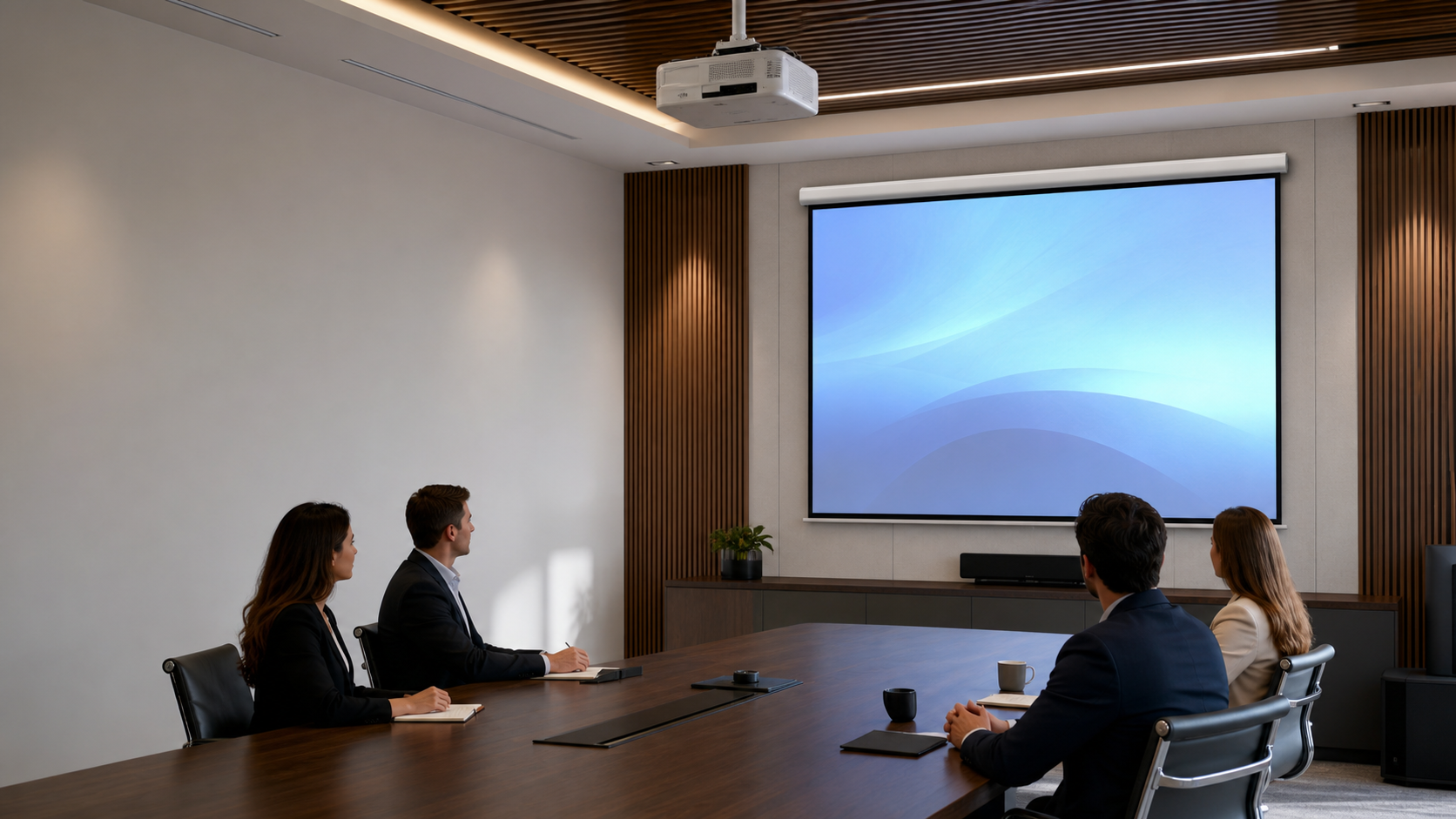
Visitor, retail, and presentation spaces.
Installed motorized screens for fixed conference, presentation and event venues with planned structure, access and control.
Space, use case, target size, and project stage.
A suitable screen, material, mounting, and control direction.
Confirm key details before production.
Build against the approved project configuration.
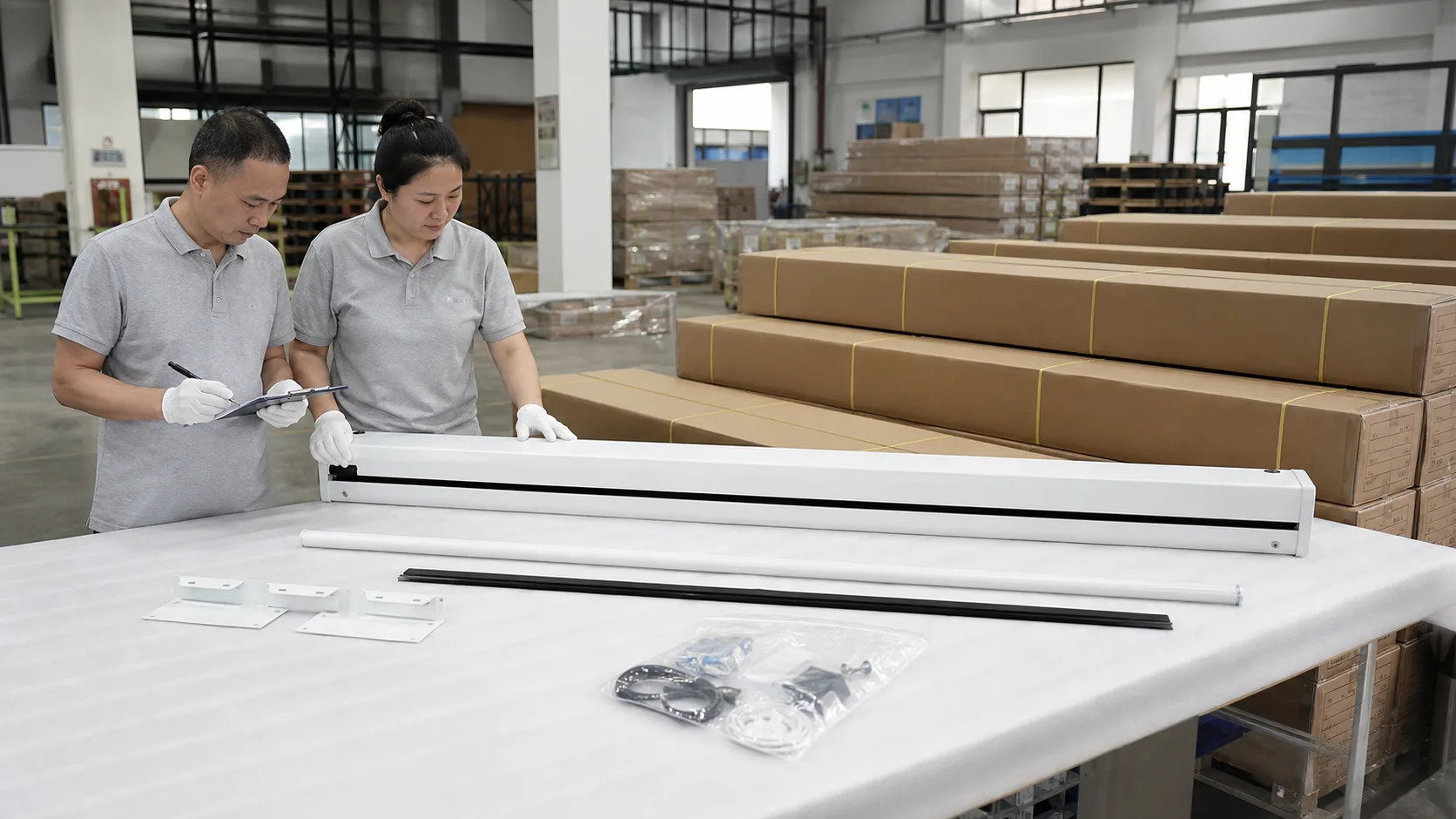
Check appearance, operation, and packing readiness.
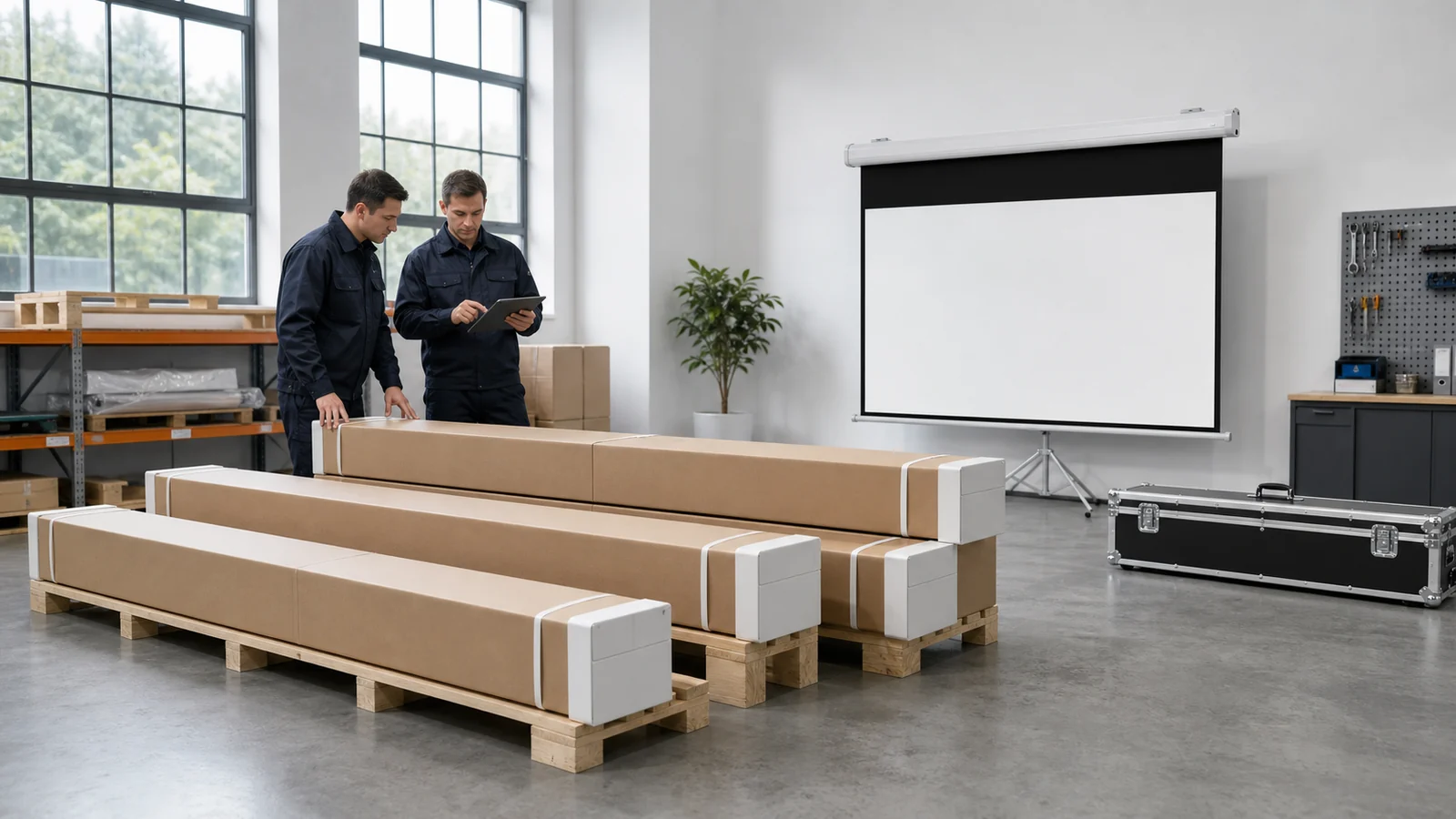
Prepare the agreed shipment and project documents.
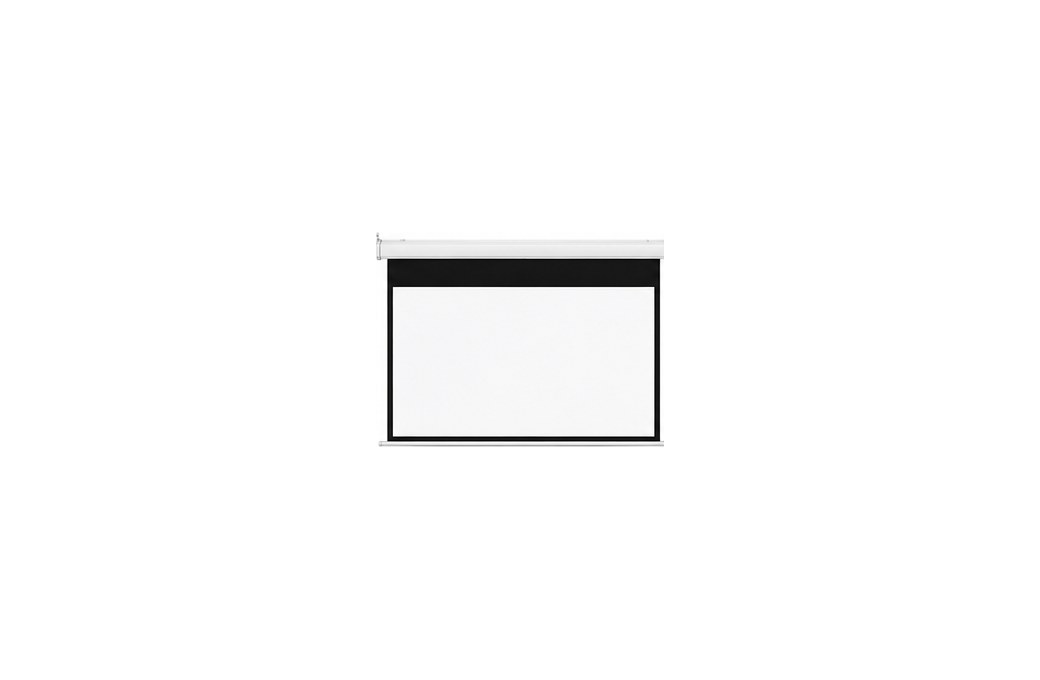
A practical motorized starting point for common home, training, and meeting spaces.
View the Standard Electric Screen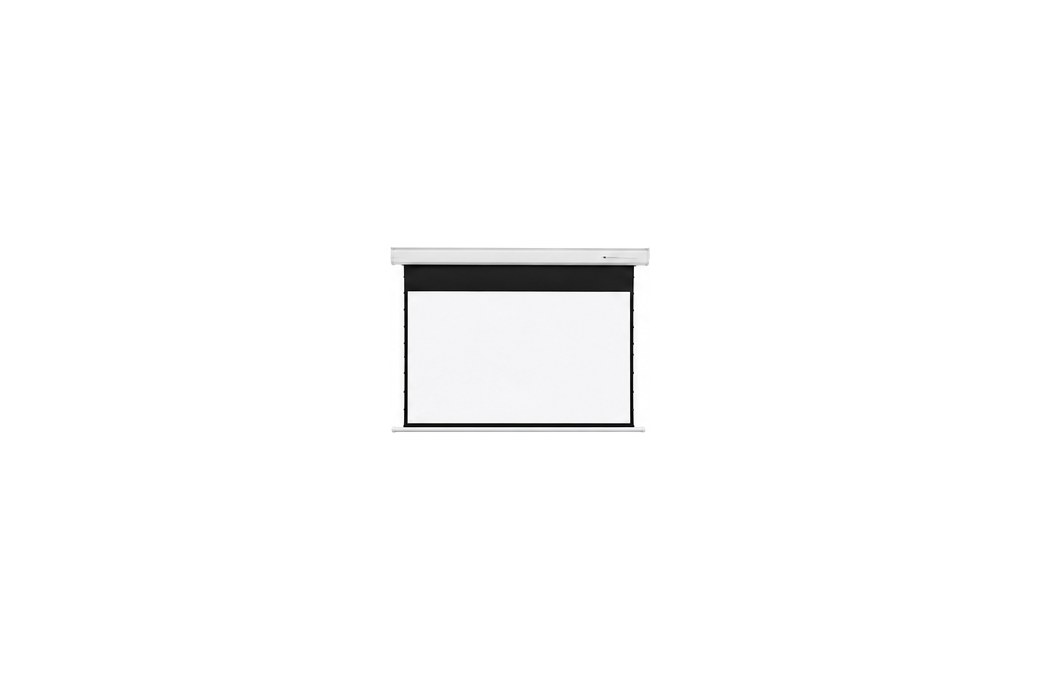
A concealed installation direction for projects where the screen should disappear when retracted.
View the In-ceiling Electric Screen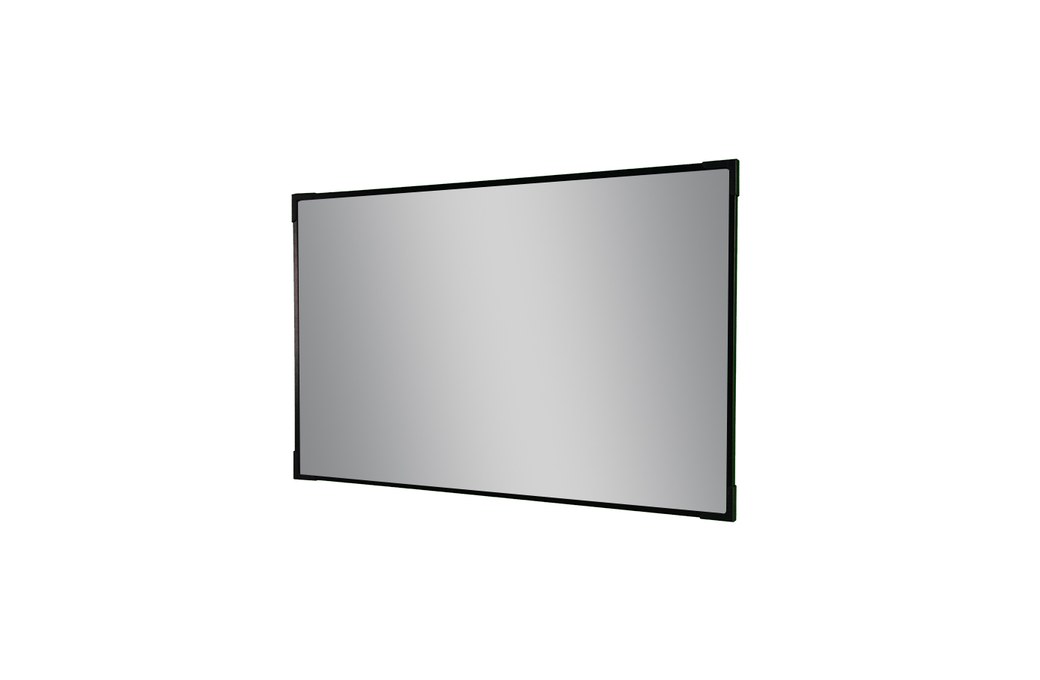
A permanent frame solution for stable geometry and a clean viewing wall.
Explore the Full-screen Fixed Frame Screen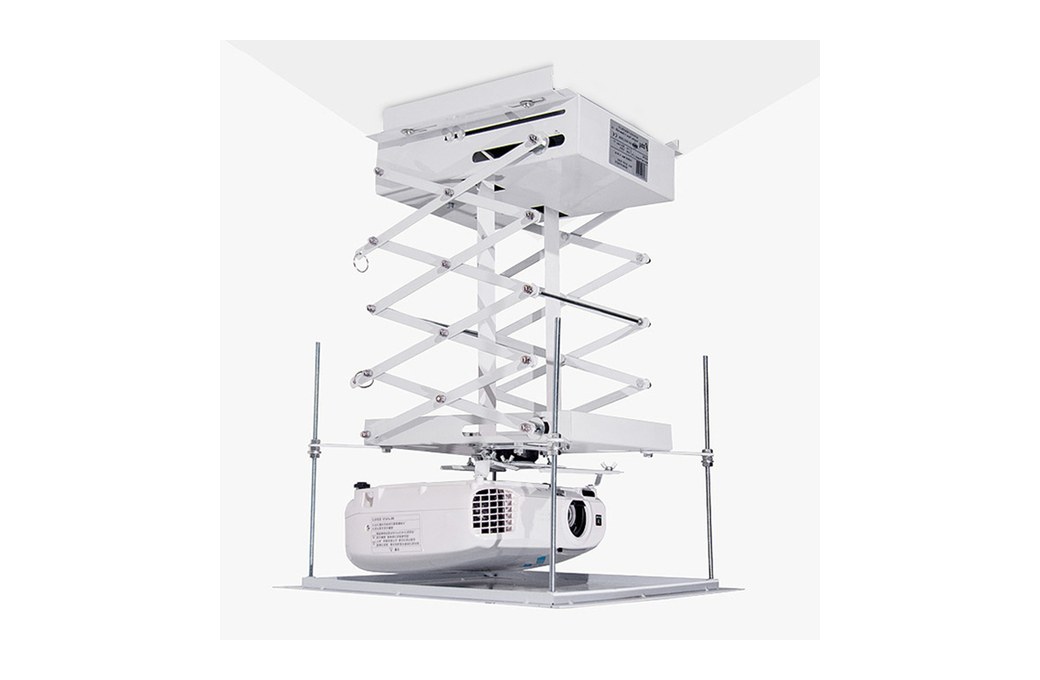
A lift direction for projects that need a concealed projector position and maintenance access.
Explore the SX Projector Lift

Choose an electric direction when repeated daily operation, clean retraction, or system integration matters more than the simplest manual deployment.
Some MGF electric screen configurations support concealed or in-ceiling installation. Confirm the housing, access, and ceiling detail for the selected model.
The control method depends on the selected screen and room system. Share the intended control environment so RF, wall switch, dry contact, or smart integration can be reviewed.
Tab tensioning is a solution direction for projects that need a flatter viewing surface. The final fit depends on size, material, installation, and projector conditions.
Start with room dimensions, viewing distance, projector model, ambient light, installation method, quantity, and target market.
Tell us about the room, projector, installation, and control environment so MGF can recommend an electric screen direction.