Acoustic Transparent vs Standard Fixed Frame Projection Screens
---
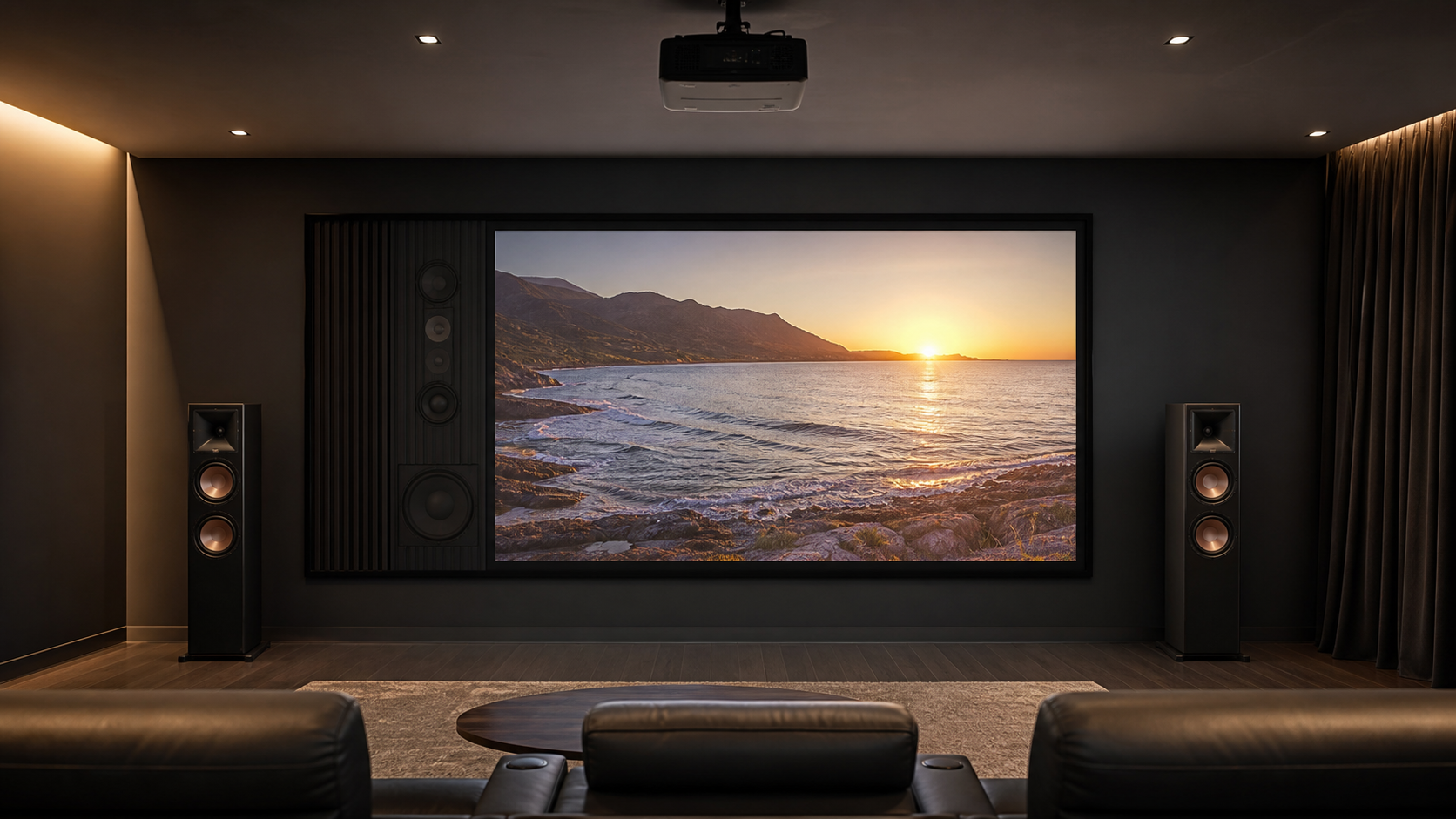
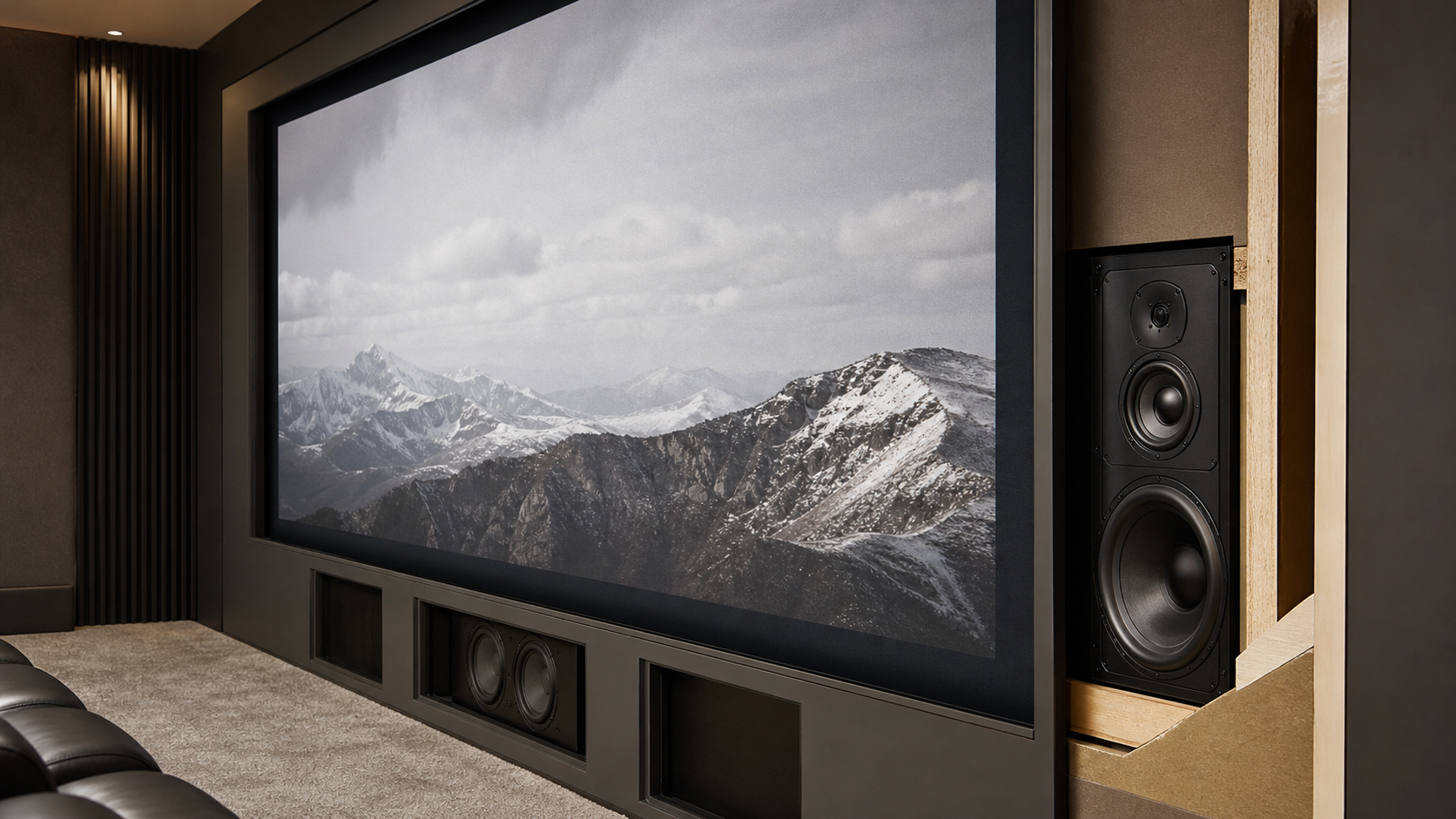
An acoustic transparent screen allows loudspeakers to sit behind the image area. A standard fixed frame screen keeps the speakers outside the image and usually provides a simpler material approval path. Neither surface is automatically better. The right decision depends on the room layout, speaker architecture, viewing distance, projector geometry, image size and how much material testing the project can support.
In This Guide
Quick Answer
Choose an acoustic transparent surface when the design requires a cinema-style speaker wall, a clean front elevation or a very wide image with left, center and right speakers aligned behind the screen. Choose a standard fixed frame surface when speakers can sit beside or below the image, the room needs a predictable wide viewing response, or the project values the simplest installation and replacement process.
The screen is one part of the front wall. Approve the screen, speakers, wall construction, projector and masking strategy as one system. MGF’s fixed frame projection screen range is a starting point for both directions; the exact surface and frame compatibility must be confirmed for the quoted model.
Who This Guide Is For
This guide is for AV integrators, distributors, contractors and project buyers who need a documented selection and project-planning path for this topic before requesting a quotation.
What Changes When the Screen Is Acoustic Transparent?
Acoustic transparency is created by a perforated or woven surface that allows sound to pass through. The visual and acoustic result depends on the material construction, perforation or weave pattern, speaker distance behind the surface, speaker response, image size and seating distance. A sample that appears acceptable at a desk may show texture or moiré when viewed close to a large image.
For that reason, do not describe an acoustic screen as “invisible” without a viewing-distance test. Ask the supplier for the proposed surface sample, recommended speaker spacing, projector type, intended image format and any restrictions on frame or tensioning systems. MGF’s acoustic transparent screen guide explains the broader approval workflow.
What a Standard Fixed Frame Screen Changes
A standard fixed frame screen places the image surface on a rigid frame while speakers remain visible or are integrated into the wall outside the image. The design is often easier to coordinate with a conventional AV layout because the speaker path does not pass through the screen.
The key decision is not simply “standard versus premium.” It is whether the room benefits more from a predictable image surface or from the architectural freedom of a speaker wall. Review screen gain and viewing angle before selecting a material based on brightness alone.
Decision Table
| Decision point | Acoustic transparent | Standard fixed frame |
|---|---|---|
| Speaker location | Behind the image area | Beside, below or above the image |
| Front-wall appearance | Clean cinema-style elevation | Simpler conventional AV layout |
| Material approval | Requires visual and acoustic testing | Usually simpler visual comparison |
| Main image risks | Texture, moiré or light loss depending on material | Speaker placement may affect sightlines |
| Best fit | Home theater, screening room, premium media room | Training, conference, classroom and standard theater layouts |
| Installation focus | Speaker cavity, surface spacing and frame depth | Wall flatness, frame fixing and cable planning |
Six Checks Before You Specify the Surface
- Confirm the speaker wall. Draw the speaker positions, cabinet depth, screen plane and access route. A shallow cavity can change sound response or make service difficult.
- Measure the closest seat. Texture and weave visibility depend on distance, image size and projector resolution. Test at the nearest and typical seats.
- Match the projector. Record throw ratio, lens shift, image width, brightness and projector orientation. Short-throw and UST systems require especially careful surface matching; use the projector pairing guide.
- Check frame compatibility. Confirm whether the chosen fabric can be mounted on the proposed fixed frame, how it is tensioned and how replacement fabric is handled.
- Review room light. A material can be visually clean in a dark room yet lose contrast in a bright room. Compare samples under the intended lighting rather than a showroom light.
- Define approval evidence. Keep the sample code, viewing distance, projector model, image size, room-light condition and approval date with the quotation.
When MGF Should Be Involved
For a standard fixed frame, send visible image size, aspect ratio, wall condition, frame border preference and projector position. For an acoustic transparent build, add speaker type, speaker depth, cavity dimensions, closest seat distance and whether the project uses front or rear projection. MGF can then confirm material availability, frame compatibility and the information required for a controlled quotation. See Factory & Production for production context and the Partner Program for distributor planning.
MGF Product Direction
MGF can compare suitable product directions once the project brief confirms visible image size, aspect ratio, projector geometry, material direction, mounting condition, control requirements, quantity and destination market. The final quotation should identify the exact model, compatible material, drawing and approval information rather than treating a generic guide as a product specification.
Project / OEM Checklist
- visible image width, height and aspect ratio;
- projector model, lens position and image geometry;
- room or venue use, seating and ambient-light condition;
- proposed material, structure, mounting and service access;
- power, control and installation responsibility where relevant;
- required quantity, destination market, drawing revision and approval owner.
Continue Your Project Planning
- Screen Materials Guides
- Fixed Frame Projection Screens
- Home Theater Applications
- Factory & Production
- Acoustic Transparent Screen Guide
- Projection Screen Gain and Viewing Angle Guide
- Contact MGF Screens
FAQ
Does acoustic transparency reduce image quality?
It can introduce texture, moiré or some light loss depending on the surface and projector. Test the proposed material at the intended size and seating distance.
Can any fixed frame use an acoustic surface?
No. Confirm fabric dimensions, attachment method, tensioning and frame compatibility for the exact model.
Is acoustic transparent always better for a home theater?
Only when the speaker-behind-screen layout solves a real design requirement. If speakers can sit outside the image, a standard surface may be easier to approve and maintain.
What should be included in a material sample approval?
Record the sample identifier, projector, image size, lighting, viewing distance, speaker layout when relevant and approval owner.
Request a Screen and Speaker-Wall Review
Send the target image size, aspect ratio, projector model, closest viewing distance, speaker arrangement and room-light condition to MGF Screens through the Contact page. The quotation should identify the approved material and frame as one coordinated system.