Outdoor Projection Screen Guide: Size, Material and Wind Safety
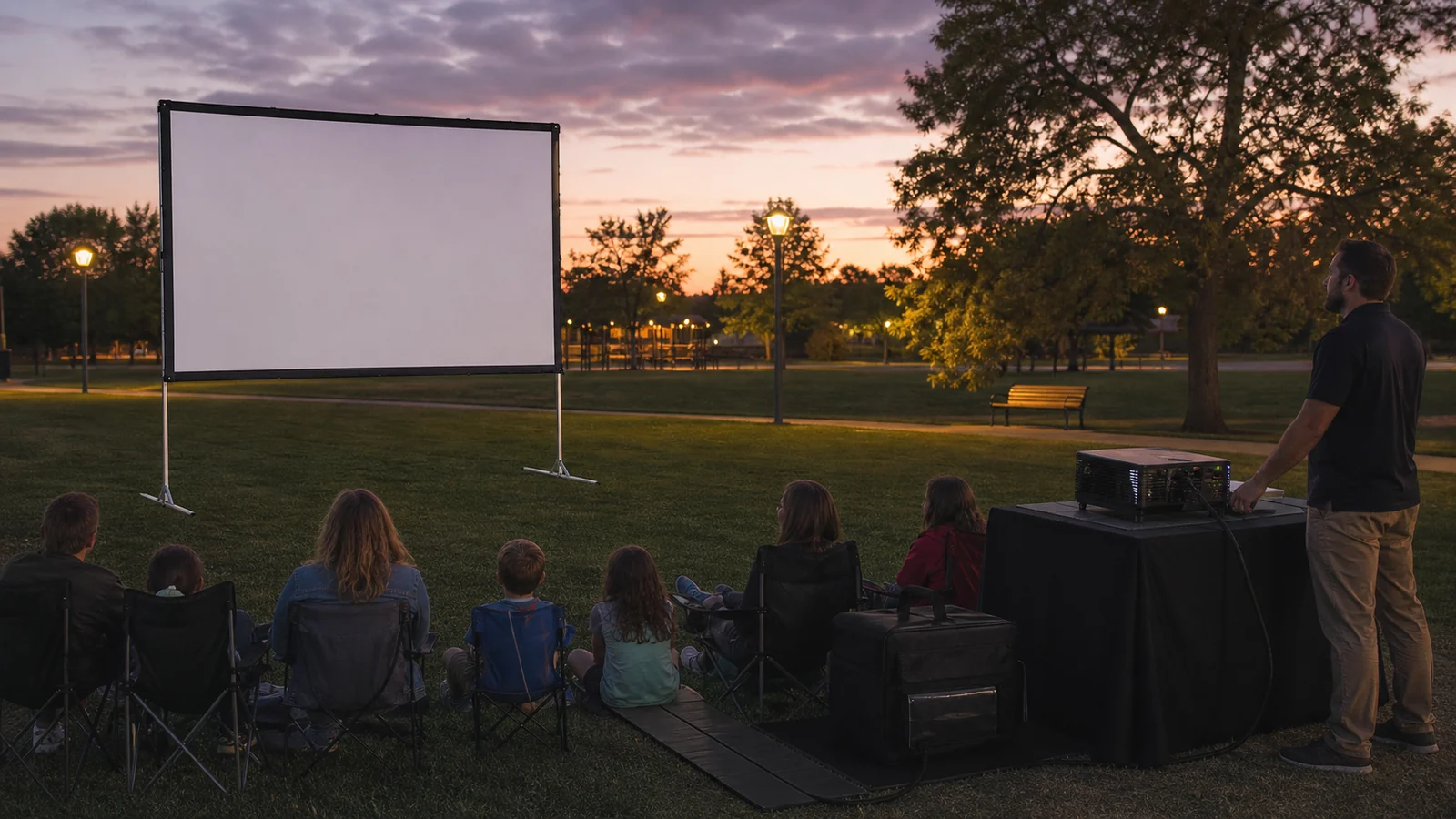
Outdoor projection is a temporary event system, not just an indoor screen moved onto grass. Darkness changes by the minute, the audience spreads wider, power routes cross public areas and even a light screen becomes a large sail in wind. A successful setup starts with site and weather planning.
This guide supports selection and coordination. It does not replace the product instructions, venue rules or a site-specific safety plan.
In This Guide
Choose the Outdoor Format
| Use case | Practical screen direction | Main advantage | Main risk |
|---|---|---|---|
| Backyard or small community movie | Portable outdoor frame | Simple transport and setup | Ground condition and wind |
| Repeated professional events | Fast-fold / portable folding | Robust transport workflow and larger formats | Crew, ballast and case logistics |
| Covered temporary presentation | Floor pull-up or smaller portable screen | Fast deployment | Limited size and circulation |
| Outdoor stage | Engineered event screen system | Integrates with production plan | Structural engineering and weather limits |
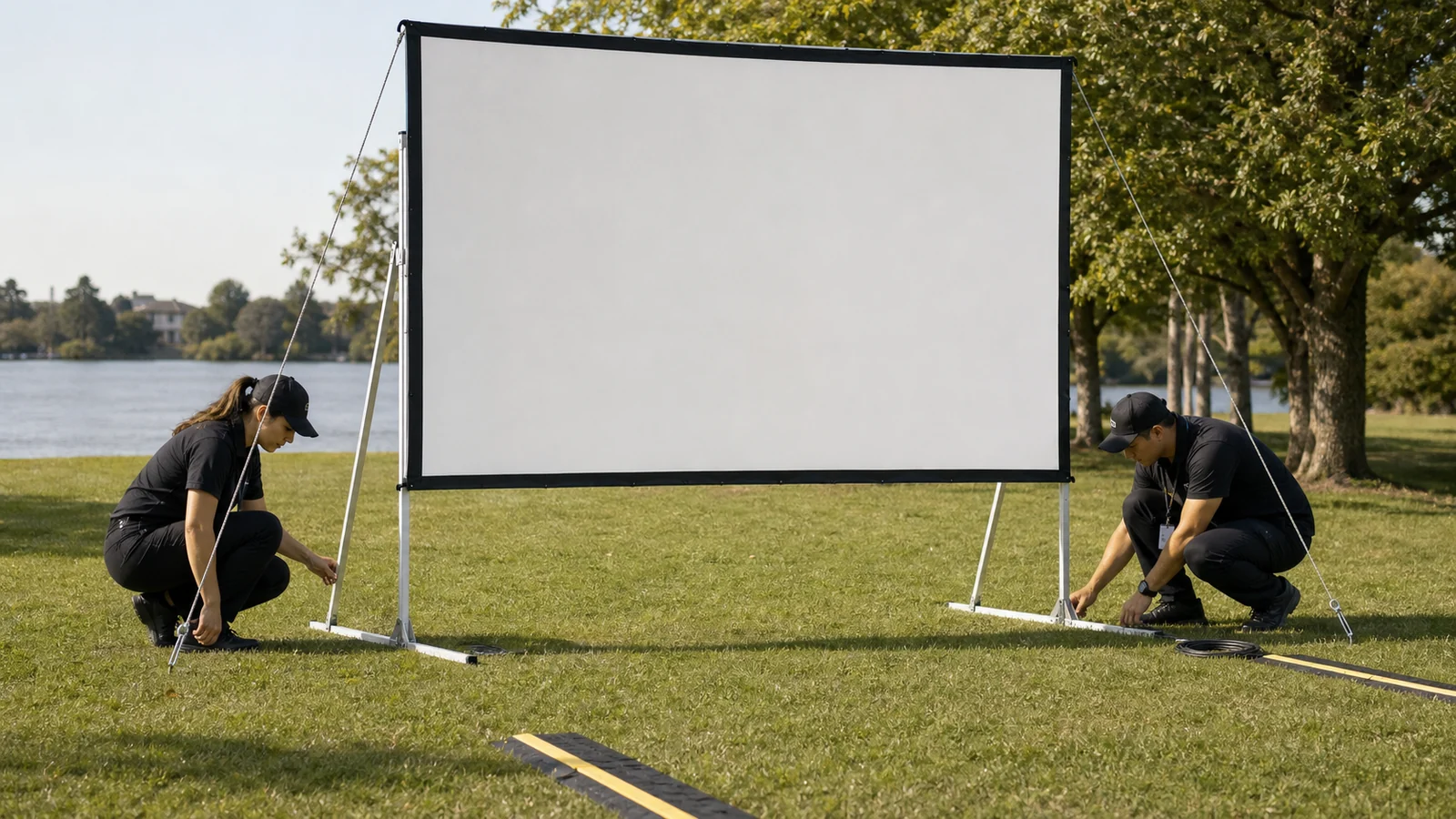
MGF product information includes a lightweight portable outdoor screen with a demountable aluminum frame, outdoor fabric, carrying bag, ground stakes and guy ropes. Accessories do not establish a universal wind rating; the responsible event team must decide whether conditions are safe.
Size From Audience and Content
Estimate the farthest viewer, audience width and smallest content. Films tolerate smaller detail than sponsor slides or captions. Keep the bottom image above heads without creating an uncomfortable viewing angle.
Confirm overall frame size and support footprint, not only visible image. Leave circulation around ropes, feet, cases, projector and protected cable routes.
Plan for Darkness and Projector Geometry
Projection competes poorly with daylight. Schedule content after suitable darkness or provide a shaded/covered environment; a special surface cannot turn midday sun into a controlled cinema. Verify projector brightness against image area and throw distance with the projector pairing guide.
Keep the projector protected from public contact and weather, aligned to the screen and outside primary circulation. Avoid extreme digital keystone as a substitute for correct placement.
Front or Rear Projection
Front projection uses less depth behind the screen but requires a clear beam path. Rear projection keeps equipment and shadows behind the image but needs substantial protected space and a compatible rear-projection surface. Our rear projection material guide explains the trade-offs.
Wind and Weather Safety
Never publish or invent a wind limit. Use only manufacturer documentation for the exact product, then apply the venue's safety plan and current weather conditions.
Before setup:
- check forecast and local alerts;
- inspect ground, drainage and anchoring options;
- confirm permitted stakes, ballast and exclusion zones;
- assign a person to monitor conditions;
- establish a lower-and-remove decision before the audience arrives;
- stop if the product moves, bows or becomes difficult to control.
Do not leave an erected screen unattended. Do not rely on improvised weights, audience members holding the frame or ropes crossing unprotected walkways. “Water-resistant fabric” does not make the projector, power, connectors or complete system weatherproof.
Surface and Image Quality
Matte white is a predictable starting point after dark. Grey surfaces may improve perceived black level in selected conditions but demand adequate projector output. Rear-projection material is chosen for transmission and backstage geometry. Approve the exact surface with the projector and planned viewing positions.
Keep hands, dirt and wet grass off the viewing area during assembly. Use clean gloves where instructed, attach the surface in the specified sequence and let it dry fully before packing if it becomes damp—only where product care instructions permit.
Power, Cables and Public Safety
Use outdoor-rated, protected electrical equipment and qualified personnel according to local requirements. Keep connections off wet ground, protect cables at crossings and maintain separation between public areas and equipment. The event plan should cover emergency shutdown, lighting for safe exit and teardown responsibility.
FAQ
Can an outdoor projector screen be used in wind?
Only within the exact product guidance and a site-specific safety plan. Conditions can change rapidly; monitor continuously and lower or remove the screen before it becomes difficult to control.
Is an outdoor screen waterproof?
Some fabrics may resist moisture, but that does not make the complete frame, projector, power and control system weatherproof. Follow product documentation and protect the entire system.
What material is best for outdoor movies?
Matte white is a practical starting point after dark. Choose grey or rear-projection materials only when projector output, light and geometry support them.
Can I project outdoors during the day?
Direct daylight overwhelms most projection systems. Use darkness or a genuinely controlled shaded environment; material choice alone cannot overcome sunlight.
Should an outdoor event use front or rear projection?
Front projection needs less backstage depth; rear projection protects the beam path but requires more space and the correct material. Choose from the site layout.
Plan the Complete Outdoor System
Send MGF your audience size, content, event time, projector, site surface, transport limits and responsible setup plan to confirm suitable portable screen options.
Request an outdoor projection screen recommendation.
---