Portable Outdoor Projection Screen Transport and Anchoring Guide
---
In This Guide
Quick Answer
An outdoor projection screen project needs more than a portable frame. Transport, unloading, ground condition, wind, moisture, audience safety, projector placement, temporary power and weather decisions all affect whether the setup is appropriate.
This guide is for event contractors, rental companies, roadshow teams and venue planners. It does not make an outdoor-weather or wind-performance claim for any MGF product. Confirm the exact model and site plan before use.
Who This Guide Is For
This guide is for AV integrators, distributors, contractors and project buyers who need a documented selection and project-planning path for this topic before requesting a quotation.
Decide Whether the Site Is Suitable
Inspect the venue before ordering. Record the surface condition, slope, drainage, audience route, nearby structures, overhead hazards, wind exposure, lighting and projector location. Identify who has authority to stop the event if conditions change.
An outdoor setup may be unsuitable when the ground cannot support the frame, the wind cannot be controlled, rain protection is unavailable or the projector and power system cannot be protected. A portable screen should never be treated as a permanent outdoor structure without an engineered review.
For product direction, start with the Portable Folding Projection Screen and Portable Projection Screens. Use the Commercial Display page as an application link and the Outdoor Projection Screen Guide as related reading.
Transport and Unloading
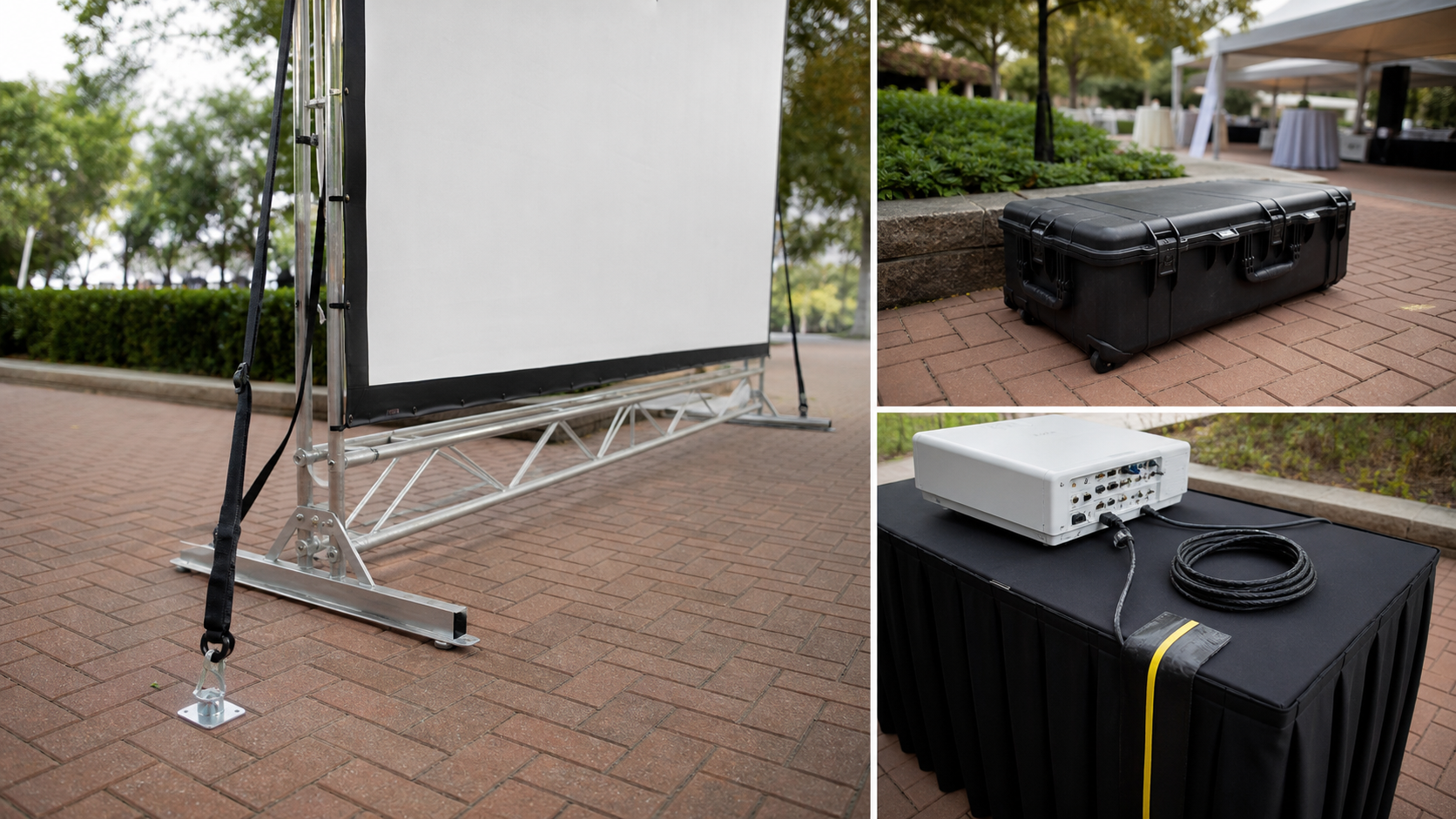
Measure the vehicle, loading route, doors, ramps, stairs and storage area. Separate the frame, legs, surface, case and accessories on the packing list. Protect the fabric from dirt, sharp edges, moisture and compression during transport.
At delivery, inspect the case, frame sections, connectors, support parts and fabric before moving them into the event area. Photograph any damage and keep the model name and packing label with the project record. Do not assemble a damaged or incomplete system until the supplier or responsible installer has reviewed it.
Anchoring and Ground Planning
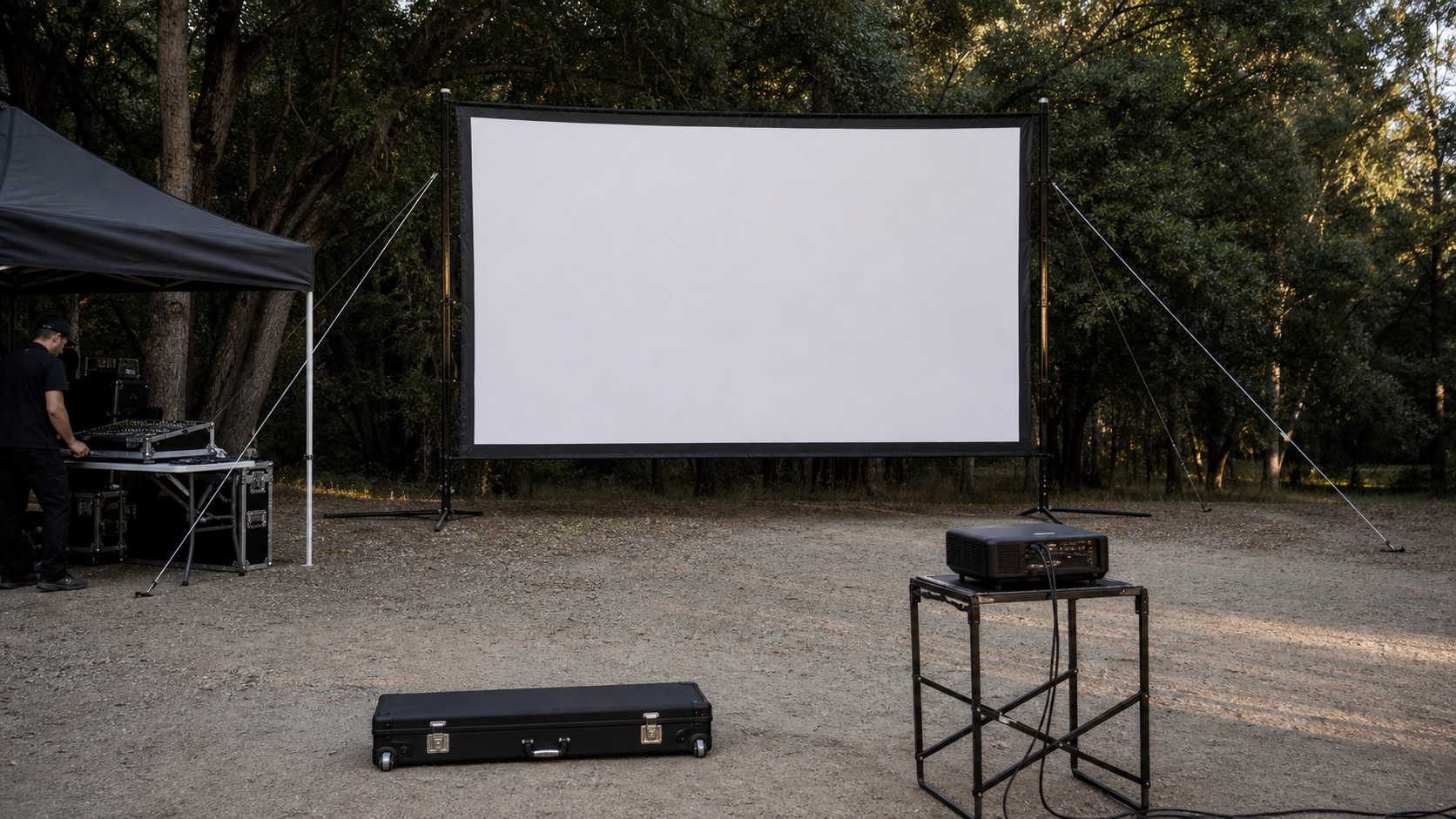
Anchoring must follow the product instructions, venue rules and site conditions. Confirm the approved support method, ballast or fixing arrangement, ground penetration restrictions and audience exclusion zone.
Do not improvise with random weights, ropes or temporary structures. The responsible event contractor should verify the setup for the actual weather forecast and site. If the screen begins to move, vibrate or lean, stop use and isolate the area.
Projector, Light and Audience Safety
Place the projector so the beam, cable route and equipment do not create a trip hazard. Protect temporary power and keep cables away from water. Control nearby lights that may wash out the image, but do not darken routes or exits.
The screen should be visible to the crew and separated from audience circulation. Keep access behind or beside the frame controlled during setup and teardown. A professional outdoor plan includes a setup lead, a weather decision point and a clear evacuation or shutdown procedure.
Teardown, Drying and Storage
Do not pack a wet or damp surface into a closed case. Follow the material instructions for drying and cleaning. Keep frame parts grouped, protect connectors and record any replacement or repair requirement before the next event.
For repeated rental use, maintain a simple inspection record: frame condition, fabric condition, support hardware, case condition, cleaning status and last setup location. The Factory & Production page provides a trust link for manufacturing context. Send project questions through Contact.
Outdoor Setup Checklist
- site and weather review;
- ground and support plan;
- vehicle and unloading route;
- frame and fabric inspection;
- anchoring or ballast confirmation;
- projector and temporary power plan;
- audience exclusion and cable route;
- shutdown authority and communication;
- drying, cleaning and storage plan.
Decision Table
| Project condition | Direction to confirm | Approval action |
|---|---|---|
| Site and audience | Ground condition, audience area and managed access | Use the event plan to determine whether a portable screen setup is suitable. |
| Transport | Cases, unloading path and setup crew | Confirm the selected configuration, packing list and handling responsibilities before dispatch. |
| Support and anchoring | Screen support, ground method and venue restrictions | Obtain a site-specific setup and anchoring plan; do not assume one method suits every venue. |
| Projection | Projector location, light direction and viewing area | Test the final image geometry and visibility in the actual event condition. |
| Teardown and storage | Drying, packing and inspection procedure | Record any damage, moisture exposure or missing components before storage or the next deployment. |
MGF Product Direction
MGF can compare suitable product directions once the project brief confirms visible image size, aspect ratio, projector geometry, material direction, mounting condition, control requirements, quantity and destination market. The final quotation should identify the exact model, compatible material, drawing and approval information rather than treating a generic guide as a product specification.
Project / OEM Checklist
- visible image width, height and aspect ratio;
- projector model, lens position and image geometry;
- room or venue use, seating and ambient-light condition;
- proposed material, structure, mounting and service access;
- power, control and installation responsibility where relevant;
- required quantity, destination market, drawing revision and approval owner.
Continue Your Project Planning
- Installation & Troubleshooting Guides
- Electric Projection Screens
- Conference Room Applications
- Factory & Production
- In-Ceiling Installation Checklist
- Motorized Screen Troubleshooting Guide
- Contact MGF Screens
FAQ
Is every portable projection screen suitable for outdoor use?
No. Confirm the exact model, site conditions, support method, weather exposure and responsible installer’s plan.
Can I add my own ballast or anchors?
Only when the responsible installer and product documentation approve the method for the actual site.
Can the screen stay outside overnight?
Do not assume so. Moisture, wind, temperature and security conditions require a site-specific decision.
What is the first thing to check after delivery?
Inspect the case, frame, support parts, connectors and fabric before moving into the setup area.
Request an Outdoor Project Review
Send the venue plan, ground condition, forecast exposure, image size, projector position and transport route to MGF Screens. Outdoor suitability must be reviewed as a site and system decision.