Portable Folding vs Fast-Fold Projection Screens
---
In This Guide
Quick Answer
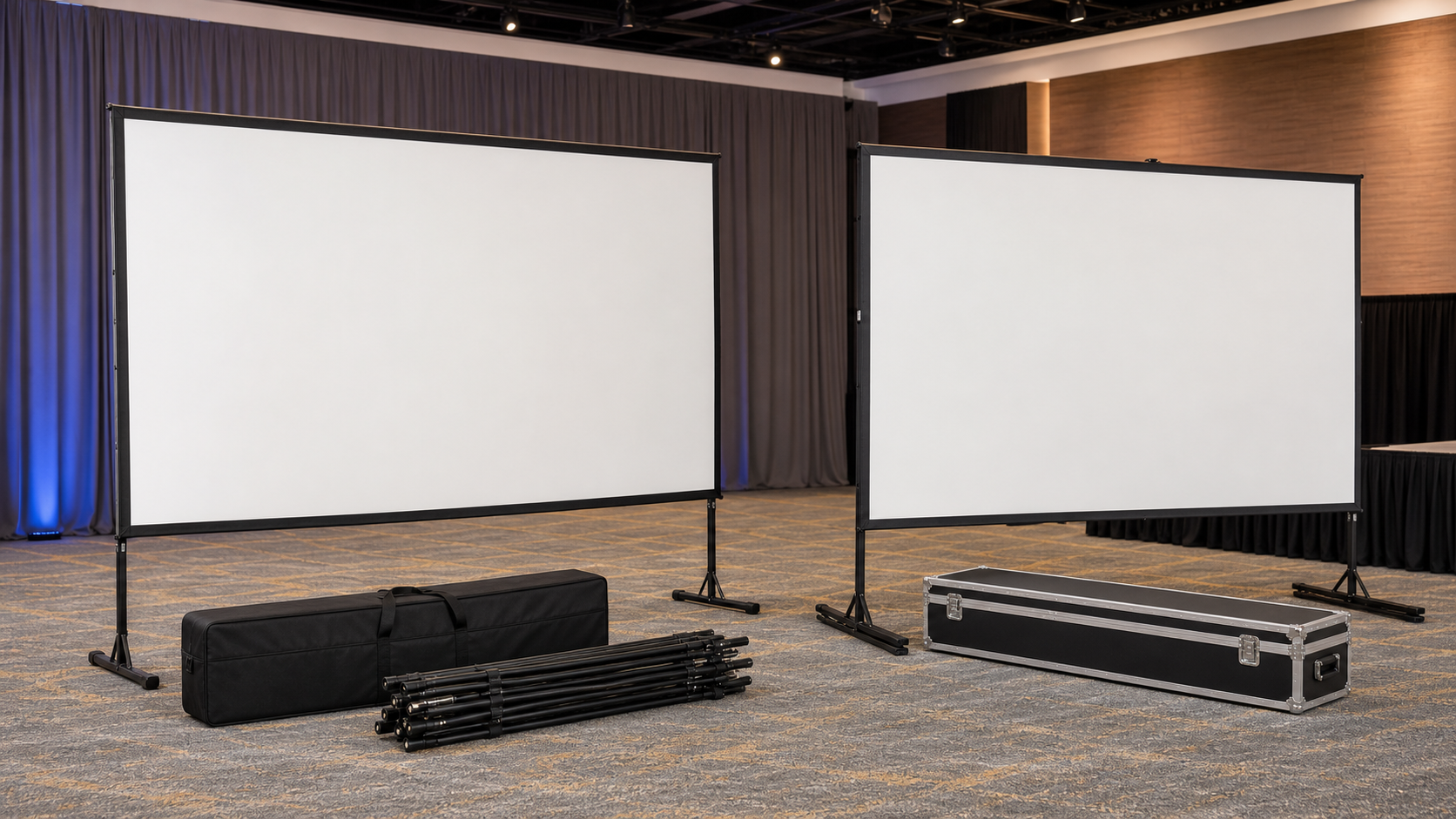
Portable folding and Fast-Fold projection screens are both designed for projects where a permanent wall or ceiling installation is not practical. The choice depends on how often the screen moves, how quickly the crew must set it up, how the frame is supported, how it is transported and what image size the venue requires.
Do not treat “portable” as a single construction. Compare the complete system: frame, legs or support, fabric attachment, case, accessories, setup sequence and storage plan.
Who This Guide Is For
This guide is for AV integrators, distributors, contractors and project buyers who need a documented selection and project-planning path for this topic before requesting a quotation.
Start With the Event Workflow
Record the venue type, audience size, image dimensions, setup crew, access route, transport vehicle, floor condition and expected setup time. A classroom training session may favor a compact system that one person can move. A roadshow or exhibition may need a repeatable frame, case and crew workflow.
The portable folding projection screen and portable projection screen range are useful starting points. For application context, compare the Commercial Display and Education Classroom use cases.
What a Portable Folding System May Offer
A portable folding system can be useful when the screen travels between rooms or venues and the crew needs a straightforward assembly method. The frame typically separates into manageable sections and the system can be packed for transport.
The project must still confirm the frame joints, support legs, fabric attachment, image surface, case dimensions and the time required to level the screen. A lightweight-looking frame is not automatically easier to transport if its case, legs or accessories are difficult to handle.
What a Fast-Fold System May Offer
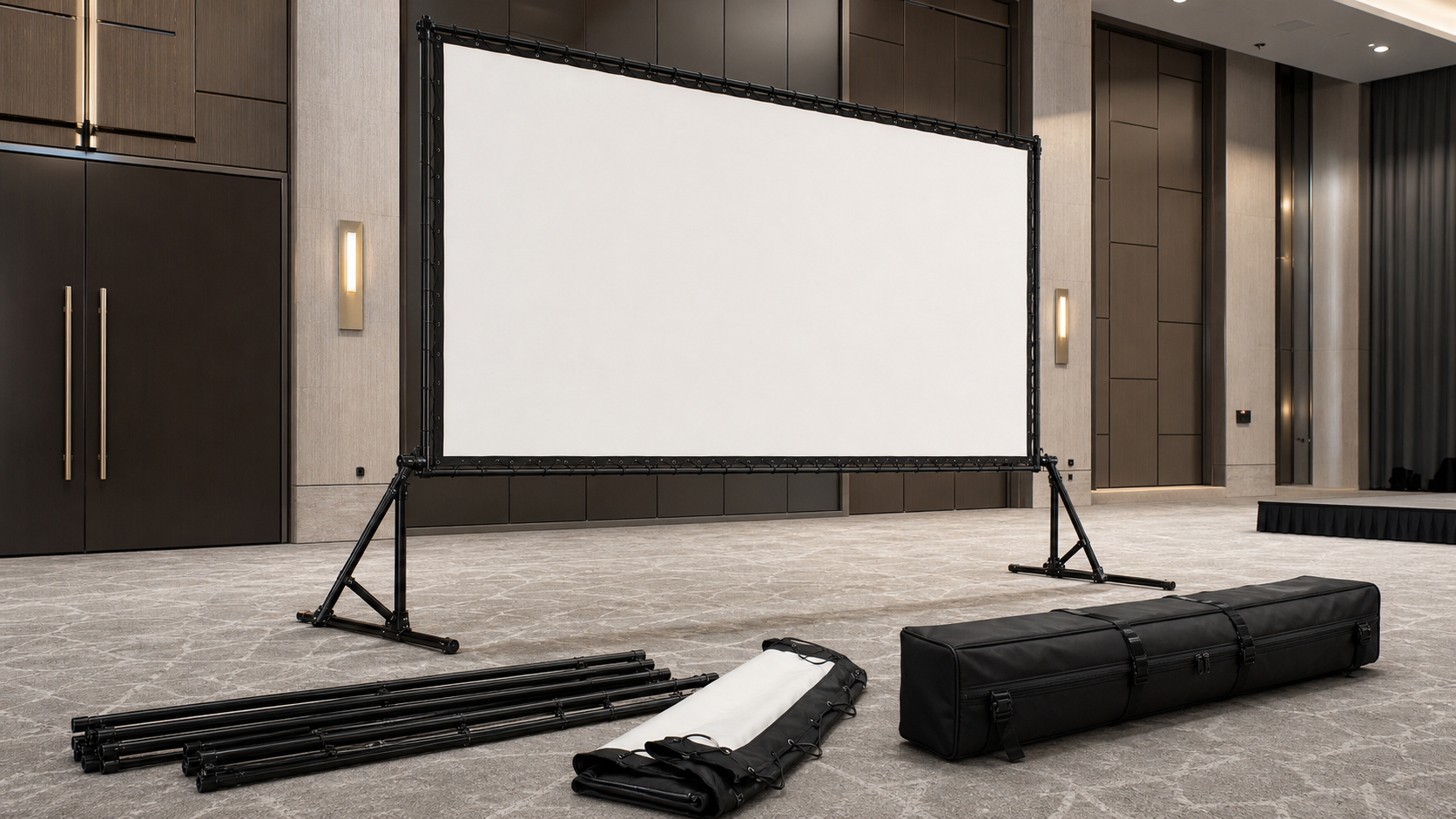
Fast-Fold describes a system designed around repeatable assembly and folding-frame use. It may be considered for events, staging, training and temporary presentation where a consistent frame and support structure are important.
Ask the supplier to explain the frame sections, support method, screen surface attachment, front/rear projection option if applicable, and the packing sequence. Confirm the parts list before shipment so the crew can identify every frame, leg, connector and surface.
Comparison Table
| Decision point | Portable folding | Fast-Fold direction |
|---|---|---|
| Primary use | Mobile presentations and smaller temporary setups | Repeated event, staging or training setups |
| Setup priority | Simple movement and assembly | Repeatable frame and support workflow |
| Transport | Compact case or separated frame | Dedicated case and organized components |
| Image size | Model dependent | Model dependent |
| Floor condition | Must be checked on site | Must be checked on site |
| Main risk | Missing or misassembled parts | Incorrect frame/leg configuration or leveling |
Surface and Projection Direction
The surface should be selected with the projector and venue. Matte white may suit controlled rooms. A rear-projection surface may help where the projector must stay behind the screen, but the venue depth, audience location and material compatibility need confirmation. For ambient light or unusual projector geometry, review the Screen Materials Hub and request a sample.
Do not describe a portable screen as outdoor or weatherproof unless the exact model and project conditions have been confirmed. Wind, moisture, uneven floors and temporary power can change the safety plan.
Transport and Setup Checklist
Before ordering, document:
- folded frame dimensions and case weight;
- vehicle access, loading route and storage space;
- frame section labels and connector list;
- leg or support configuration;
- fabric protection and cleaning method;
- floor-leveling and anchoring requirement;
- front or rear projection direction;
- setup crew and acceptance test;
- replacement and spare-part identification.
Use the portable screen events guide for a related planning reference. MGF Screens’ Factory & Production page provides a trust link for production questions, and Contact can be used for a project RFQ.
MGF Product Direction
MGF can compare suitable product directions once the project brief confirms visible image size, aspect ratio, projector geometry, material direction, mounting condition, control requirements, quantity and destination market. The final quotation should identify the exact model, compatible material, drawing and approval information rather than treating a generic guide as a product specification.
Project / OEM Checklist
- visible image width, height and aspect ratio;
- projector model, lens position and image geometry;
- room or venue use, seating and ambient-light condition;
- proposed material, structure, mounting and service access;
- power, control and installation responsibility where relevant;
- required quantity, destination market, drawing revision and approval owner.
Continue Your Project Planning
- Screen Selection Guides
- Electric Projection Screens
- Fixed Frame Projection Screens
- Conference Room Applications
- Factory & Production
- Projection Screen Size and Aspect Ratio Guide
- Contact MGF Screens
FAQ
Is Fast-Fold always faster to set up?
Not automatically. Setup time depends on frame design, crew experience, case organization, floor condition and the exact model.
Which option is better for exhibitions?
Choose from setup frequency, transport route, available crew, image size and the venue’s projection direction. A repeatable frame and case may be valuable for frequent events.
Can a portable folding screen be used outdoors?
Only when the exact product and site plan support it. Wind, moisture, anchoring and electrical safety require a separate review.
What should be approved before shipment?
Approve the frame drawing, fabric, parts list, packing method, setup instructions and acceptance checklist.
Request a Portable Screen Comparison
Send the image size, venue, setup frequency, transport route, projector position and crew information to MGF Screens. The product, frame and case should be specified as one system.