What Drives the Cost of an OEM Projection Screen Order
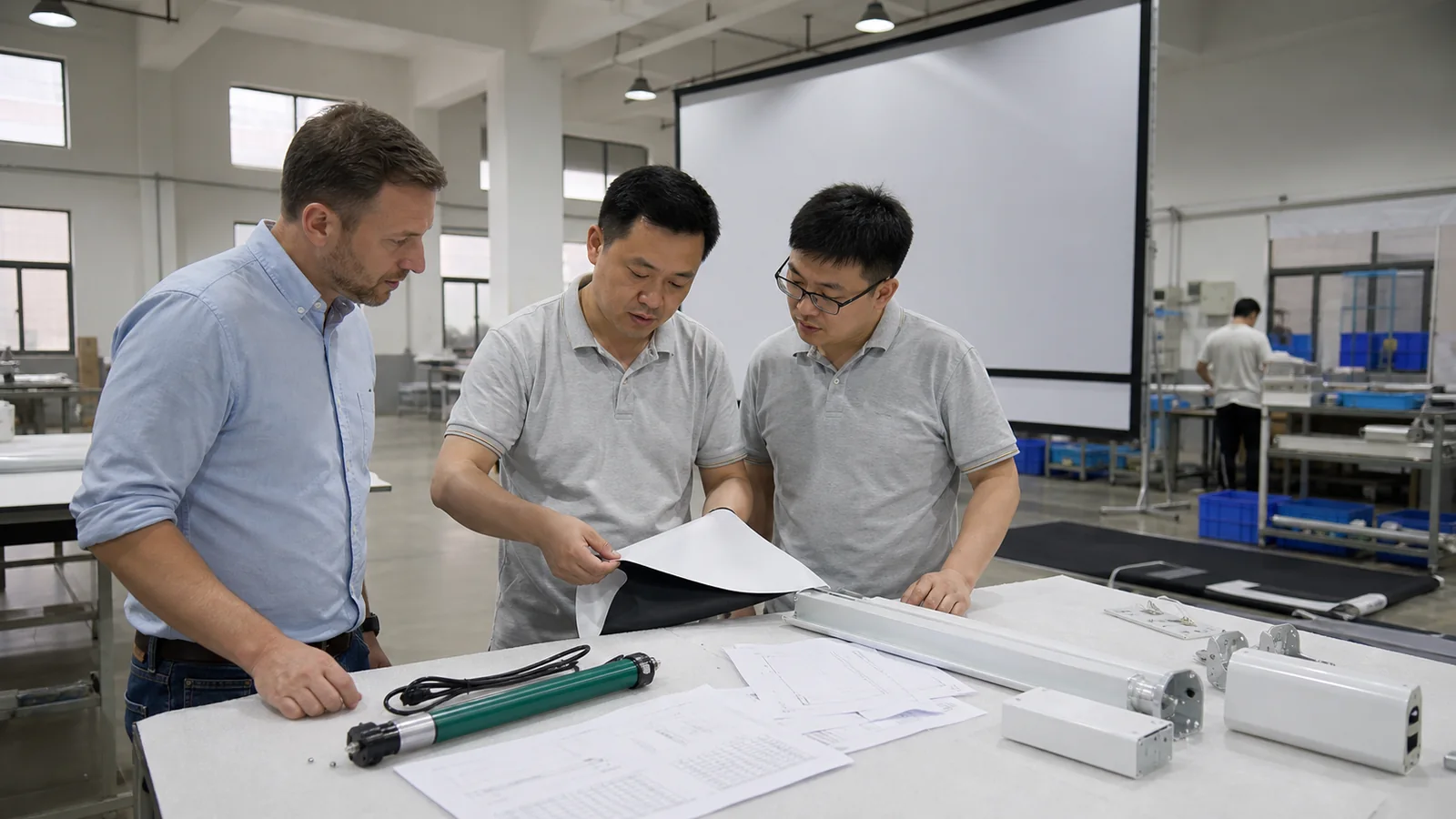
Two quotes for "a 120-inch motorized screen" can differ substantially—and both may reflect different, internally consistent assumptions. Once the quotes are decomposed, the gap often comes from different materials, motors, packaging and interpretations of what the RFQ left unspecified.
This guide breaks down the cost structure of an OEM projection screen order so that distributors, AV brands and project buyers can read quotes intelligently, compare them fairly, and decide deliberately where to spend and where to save. It deliberately contains no prices: absolute numbers change with size, volume, material markets and exchange rates. The structure below does not.
In This Guide
The Nine Cost Drivers
| # | Cost driver | What moves it | Why quotes change |
|---|---|---|---|
| 1 | Screen size and format | Area, width, aspect ratio | Changes material area, structural specification and packing length |
| 2 | Surface material | Material family and grade | Changes the optical surface and processing cost |
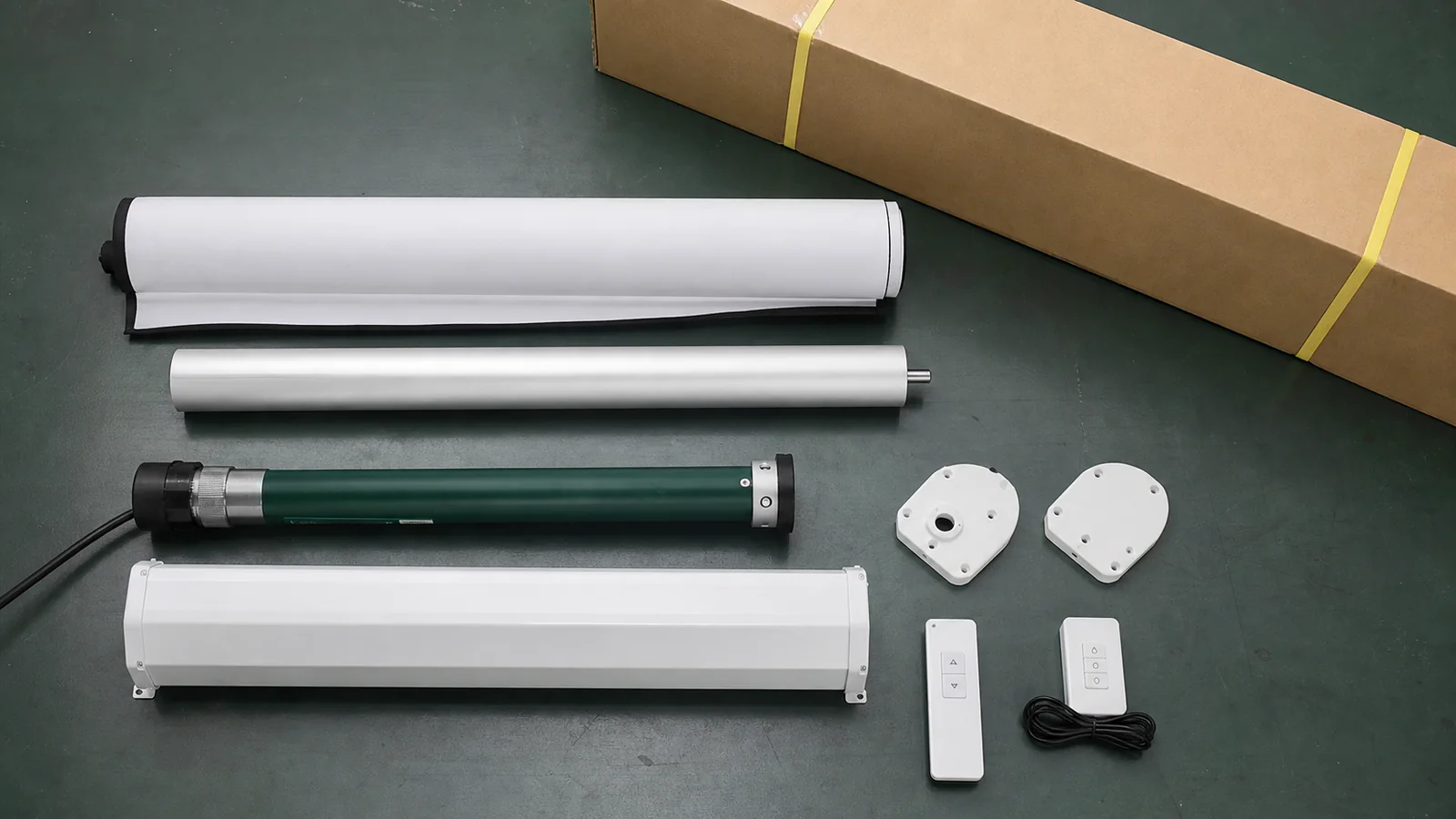
| 3 | Structure type | Manual / motorized / tab-tension / fixed / floor-rising | Changes the mechanism and assembly work |
| 4 | Motor and control options | Motor grade, interfaces, accessories | Changes electrical components and integration scope |
| 5 | Housing and finish | Casing type, profile, finish level | Changes visible materials and finishing work |
| 6 | Customization and branding | Logos, colors, custom lengths, packaging design | Adds setup and one-time development work |
| 7 | Packaging and protection | Export packaging grade, crating | Changes damage protection and shipment preparation |
| 8 | Compliance and documentation | Destination-market requirements, testing, documents | Changes testing, labeling and document scope |
| 9 | Order quantity and mix | Volume, size mix, consolidation | Changes setup allocation and purchasing efficiency |
1. Size and Format
Cost scales with area, but not linearly. Beyond certain widths, material webs, roller tubes, housings and packaging all step up in specification, and freight class can change. Two practical consequences:
- a small nominal size increase near a threshold can cost more than expected;
- a size mix across an order affects price differently than a single-size calculation suggests.
Define visible image size precisely—the planning method in our size and aspect ratio guide—because "about 120 inches" forces the factory to guess, and guesses get priced defensively.
2. Surface Material
Material families—standard matte white, grey/contrast, ALR, acoustically transparent, rear projection—sit at genuinely different cost levels, and grades exist within each family. Material choice also interacts with structure: some materials suit rolling, others only fixed tensioning.
This is a place to spend where image requirements demand it and save where they don't: a training room fleet does not need the material a flagship showroom needs. The room-based selection logic is in our gain and viewing angle guide and ALR vs matte white guide.
3. Structure Type
Structure is one of the main cost levers after size and material:
- manual screens carry the least mechanism;
- standard motorized adds roller motor and control;
- tab-tension motorized adds tensioning hardware, assembly time and alignment work—the flatness premium explained in our tab-tensioned vs non-tensioned guide;
- fixed frame trades mechanism for frame material and surface area;
- floor-rising adds a lifting structure and weighted base.
Buying the structure the application actually needs—rather than one grade "to be safe" across an entire order—is where procurement discipline pays most.
4. Motor and Control Options
Within "motorized," motor grade and control configuration move cost: motor origin and duty specification, quiet-operation grades, and the interface set—receivers, wall switches, triggers, dry-contact or serial modules. Interfaces left unspecified at RFQ time reappear later as extras, or worse, as site delays. Specify the control method per the checklist in our control and integration guide.
5. Housing and Finish
Casing material and profile (steel vs aluminum, standard vs slim or architectural profiles), end caps, paint or anodizing grade and visible-surface finish all contribute. For concealed installations the housing is functional; for exposed installations it is part of the room. Price the housing to its visibility.
6. Customization and Branding
OEM orders add a layer standard products don't have: brand logos and their application method, custom casing colors, custom lengths, printed packaging, manuals and labeling. Each is individually modest; together they matter—and one-time costs (tooling, printing plates, packaging dies) behave differently from per-unit costs. Ask for one-time and per-unit charges to be quoted separately so volume decisions are informed.
7. Packaging and Protection
Projection screens are long products that are vulnerable to bending and impact in freight. Packaging grade—carton strength, internal protection, palletizing or crating—is both a cost line and a quality decision. Confirm the packaging specification explicitly rather than assuming every quote includes the same protection.
8. Compliance and Documentation
Destination markets differ in what they require for electrical products, documentation and labeling. Requirements, certificates and testing arrangements—and who bears their costs—are confirmed per order at the quotation stage. Raise the destination market in the first inquiry: retrofitting compliance after production is the expensive path.
9. Quantity and Order Mix
Volume moves price through setup amortization, material purchasing and packing efficiency—but so does order shape: one size in volume prices differently from the same volume across many sizes. Minimum order quantities and volume thresholds vary by product and configuration and are confirmed with the factory at quotation; a realistic annual forecast, honestly shared, usually does more for pricing than a negotiated single order.
Why Quotes Differ Between Factories
When comparing factories, most gaps trace to:
- different assumptions filling specification gaps — the cheaper quote often assumes the cheaper material, motor and packaging;
- different included scope — accessories, interfaces, documentation in one quote, extras in another;
- different quality baselines — verifiable only by sample and factory evidence, which is what our 12-point factory evaluation framework is for;
- genuinely different efficiency—real, but smaller than buyers assume.
An unusually low quote is a prompt to find which of the first three explains it.
Building an RFQ That Gets Comparable Quotes
Fix the nine drivers explicitly, then let factories compete on the same specification:
- visible image size(s), aspect ratio and quantity per size;
- structure type per line item;
- named material family and grade expectations;
- motor and control configuration;
- housing type and finish level;
- branding and customization scope;
- packaging specification;
- destination market and required documentation;
- delivery terms and a realistic forecast.
Then request itemization of one-time versus per-unit costs and a stated list of exclusions. The workflow from this point—samples, approvals, inspection, shipment—is covered in our OEM ordering process guide; partnership-level cooperation is described on the MGF partner program page.
FAQ
Why do OEM projection screen quotes vary so much between factories?
Mostly because unspecified details get filled with different assumptions—material grade, motor, packaging, included accessories. Fixing the specification in the RFQ removes most of the gap; the remainder is scope, quality baseline and factory efficiency.
What is the biggest cost driver in a projection screen order?
Size and structure type set the base level; surface material is the largest variable within a given size. Motor options, housing finish, customization and packaging then adjust around that base.
What MOQ applies to OEM projection screens?
Minimums vary by product, configuration and customization level, and are confirmed with the factory at the quotation stage. Customized components—printed packaging, custom colors—typically carry their own minimums distinct from the product itself.
How can I lower cost without lowering quality?
Match structure and material to each application instead of specifying one premium grade everywhere; consolidate sizes where the project allows; share a realistic forecast; and spend deliberately on packaging—transport damage is the falsest economy in this category.
Should I just choose the lowest quote?
Treat an outlier low quote as a question, not an answer: identify whether it assumes cheaper components, excludes scope or reflects a lower quality baseline. Verify with samples and the factory-evaluation checks before committing volume.
Get an Itemized OEM Quotation
Send MGF your size list, structure types, material direction, control requirements, branding scope and destination market. Ask MGF to confirm the available quotation breakdown, including any one-time customization charges, per-unit items and quantity or configuration thresholds that apply to the inquiry.
Contact MGF Screens for an OEM quotation.
---